bell hooks’s Collection: Talking Back
Quick Answer
- “Talking Back” by bell hooks is a collection of essays exploring the power of voice, particularly for marginalized individuals.
- It challenges conventional notions of silence and assertion, advocating for critical engagement with dominant narratives.
- This work is essential for readers interested in feminist theory, critical pedagogy, and the politics of voice.
Who This Is For
- Readers seeking to understand the theoretical underpinnings of empowerment and self-expression.
- Individuals interested in how language and discourse shape social power dynamics.
What to Check First
- Author’s Background: bell hooks was a prolific academic and social activist whose work consistently addressed race, class, gender, and education. Understanding her broader context is crucial.
- Collection’s Scope: “Talking Back” is a collection, meaning it comprises distinct essays. Reviewing the table of contents can provide an overview of the specific topics covered.
- Publication Context: The essays within “Talking Back” were written and published at specific historical moments. Recognizing this context is vital for interpreting their arguments.
For a foundational understanding of bell hooks’s seminal work, consider picking up a copy of ‘Talking Back.’ This collection of essays is a powerful exploration of voice and resistance.
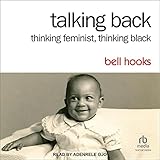
- Audible Audiobook
- Bell Hooks (Author) - Adenrele Ojo (Narrator)
- English (Publication Language)
- 04/11/2023 (Publication Date) - Tantor Media (Publisher)
Step-by-Step Plan for Engaging with Talking Back by bell hooks
1. Read the Introduction: Action: Read bell hooks’s introductory essay carefully. What to look for: The author’s stated purpose, the central thesis, and the intended audience. Mistake: Skipping the introduction and diving directly into individual essays, potentially missing the overarching framework.
2. Identify Core Themes: Action: As you read each essay, note recurring concepts. What to look for: Repeated discussions of voice, silence, pedagogy, power, and resistance. Mistake: Focusing on isolated arguments without recognizing the interconnectedness of themes across the collection.
3. Analyze Pedagogical Approaches: Action: Examine how hooks discusses education and learning. What to look for: Her critique of traditional schooling and her vision for liberatory pedagogy. Mistake: Viewing her educational ideas as purely academic without considering their practical implications for teaching and activism.
4. Evaluate the Concept of “Talking Back”: Action: Pay close attention to how hooks defines and utilizes the phrase “talking back.” What to look for: The nuanced meaning beyond simple opposition, emphasizing the reclaiming of voice and narrative. Mistake: Interpreting “talking back” as mere defiance or rudeness, overlooking its strategic and empowering dimension.
5. Consider the Audience: Action: Reflect on who hooks is addressing and who she is critiquing. What to look for: The distinct voices and perspectives she engages with, including those of students, educators, and dominant cultural forces. Mistake: Assuming a monolithic audience, thereby missing the specific interlocutors hooks is speaking to.
6. Engage with the Nuance of Voice: Action: Analyze the specific examples hooks uses to illustrate the power and politics of voice. What to look for: Instances where reclaiming speech leads to empowerment or where silence is strategically used. Mistake: Overlooking the complexities of voice, such as the potential for one’s voice to be co-opted or distorted.
7. Contextualize Critiques: Action: Understand the societal structures and power dynamics hooks is challenging. What to look for: Her critiques of patriarchy, white supremacy, and capitalist ideology. Mistake: Treating her critiques as abstract complaints rather than grounded analyses of systemic oppression.
Common Myths
- Myth: “Talking Back” is simply about being argumentative or defiant.
- Why it matters: This misinterpretation reduces a profound exploration of reclaiming voice to mere petulance, ignoring the strategic and empowering aspects of asserting oneself against oppressive systems.
- Fix: Understand “talking back” as a conscious act of challenging dominant narratives, reclaiming one’s subjectivity, and asserting agency, often in educational or social contexts.
- Myth: bell hooks’s ideas are only relevant to academics or activists.
- Why it matters: This limits the broad applicability of her work, suggesting it lacks practical value for everyday individuals.
- Fix: Recognize that hooks’s concepts of voice, critical thinking, and self-empowerment are fundamental to personal development and navigating social interactions in any sphere.
Talking Back by bell hooks: Key Themes and Analysis
bell hooks’s collection, “Talking Back,” offers a potent examination of how voice functions as a site of power, resistance, and self-definition. The essays delve into the act of speaking out, particularly for those who have been historically silenced or marginalized. Hooks argues that “talking back” is not simply an act of opposition but a crucial process of reclaiming one’s narrative and challenging oppressive structures. This collection serves as a foundational text for understanding the intersection of pedagogy, identity, and political consciousness.
The Politics of Voice in Education
A central concern throughout “Talking Back” is the role of voice within educational settings. hooks critiques traditional pedagogical models that often silence students, particularly those from marginalized backgrounds, by devaluing their experiences and perspectives. She advocates for a liberatory pedagogy where students are encouraged to speak, question, and engage critically with the material and the world around them. This approach, she posits, is essential for fostering intellectual and personal growth.
BLOCKQUOTE_0
This quote encapsulates hooks’s conviction that enforced silence is a tool of oppression. The act of “talking back” becomes a vital affirmation of existence and a necessary step toward agency.
Counterpoint: The Nuance of Speaking Out
While “Talking Back” champions the power of voice, it is crucial to acknowledge the complexities involved. The act of speaking out is not always met with receptiveness; it can invite backlash, misunderstanding, or even further marginalization. Hooks herself navigates these complexities, often highlighting the strategic nature of assertion. The effectiveness of “talking back” depends not only on the speaker but also on the context and the willingness of others to listen and engage.
Expert Tips for Engaging with “Talking Back”
- Tip 1: Practice Active Listening to Diverse Voices:
- Actionable Step: When reading “Talking Back,” consciously identify the different voices hooks represents or critiques.
- Common Mistake to Avoid: Assuming all voices within a dominant culture or a marginalized group are monolithic; hooks emphasizes internal diversity and varied experiences.
- Tip 2: Connect Theoretical Concepts to Lived Experience:
- Actionable Step: For each essay, reflect on a personal experience where voice or silence played a significant role.
- Common Mistake to Avoid: Treating hooks’s ideas as abstract theory detached from practical reality; her work is deeply rooted in lived experience and social critique.
- Tip 3: Recognize the Interplay of Power and Discourse:
- Actionable Step: Analyze how language and the act of speaking (or not speaking) are used to maintain or challenge power structures in the examples hooks provides.
- Common Mistake to Avoid: Underestimating the subtle ways discourse can reinforce inequality; hooks’s analysis is precise about these mechanisms.
Decision Rules
- If reliability is your top priority for Talking Back by bell hooks, choose the option with the strongest long-term track record and support.
- If value matters most, compare total ownership cost instead of headline price alone.
- If your use case is specific, prioritize fit-for-purpose features over generic ‘best overall’ claims.
FAQ
- Q: What is the primary message bell hooks conveys in “Talking Back”?
A: The primary message is that reclaiming one’s voice, particularly for marginalized individuals, is a critical act of resistance, empowerment, and self-definition against oppressive forces.
- Q: Is “Talking Back” a difficult read?
A: The essays are intellectually stimulating and can be challenging due to their critical nature and theoretical depth, but they are generally accessible to readers engaged with social and feminist theory.
- Q: How does “Talking Back” relate to bell hooks’s other works?
A: “Talking Back” is foundational to many of hooks’s subsequent explorations of education, feminism, and race, consistently emphasizing the importance of voice and critical consciousness.
| Feature | Description | Significance |
|---|---|---|
| Voice as Power | The ability to speak and be heard as a mechanism for challenging oppression. | Essential for self-determination and dismantling systemic inequalities. |
| Liberatory Pedagogy | Educational approaches that encourage critical thinking and student voice. | Fosters intellectual growth and empowers students to engage with and transform their social realities. |
| Resistance | The act of speaking out against dominant narratives and power structures. | A fundamental tool for marginalized groups to assert agency and demand recognition. |
| Self-Definition | The process of shaping one’s own identity and narrative, often through speech. | Crucial for countering externally imposed labels and reclaiming personal autonomy. |