bell hooks’ Powerful Essays: Ain’t I A Woman?
This review offers a detailed analysis of bell hooks’ seminal work, Ain’t I A Woman: Black Women and Feminism, examining its core arguments, thematic strengths, and potential limitations for contemporary readers.
Quick Answer
- Ain’t I A Woman? is a foundational text in Black feminist thought, critically dissecting the intersection of racism and sexism.
- It is essential reading for understanding the historical marginalization of Black women within both feminist and civil rights movements.
- While powerful, its historical context requires careful consideration for modern application.
Who This Is For
- Readers seeking to understand the origins and evolution of Black feminist theory.
- Individuals interested in the historical experiences of Black women and their struggle for liberation.
For anyone looking to understand the foundational arguments of Black feminist thought, bell hooks’ Ain’t I A Woman? is an essential read. It critically dissects the intersection of racism and sexism, offering profound insights.
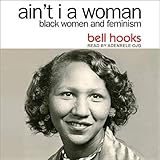
- Audible Audiobook
- Bell Hooks (Author) - Adenrele Ojo (Narrator)
- English (Publication Language)
- 03/12/2019 (Publication Date) - Tantor Media (Publisher)
What to Check First
- Publication Date: First published in 1981, the book reflects the socio-political landscape of that era.
- Author’s Intent: bell hooks aimed to articulate the unique oppressions faced by Black women, often overlooked by mainstream feminism and anti-racist movements.
- Core Themes: Identify key concepts such as the “myth of black matriarchy,” the impact of slavery on Black women’s identity, and the critique of white supremacy within feminism.
- Historical Context: Familiarize yourself with the Black Power movement and second-wave feminism to better grasp the dialogues hooks engages with.
Step-by-Step Plan for Engaging with Ain’t I A Woman? by bell hooks
1. Understand the Historical Context: Read the introductory material and any scholarly essays that frame the book within the late 20th century.
- Action: Note the historical period and dominant social movements hooks was responding to.
- What to Look For: References to the Civil Rights Movement, Black Power, and second-wave feminism.
- Mistake: Assuming the book’s arguments are directly transferable to contemporary issues without acknowledging historical shifts.
2. Engage with Chapter 1: “Oppression”: Focus on hooks’ initial dissection of how Black women experience oppression differently due to the intersection of race and sex.
- Action: Identify specific examples hooks uses to illustrate this intersectionality.
- What to Look For: The analysis of how slavery and its aftermath shaped Black women’s experiences.
- Mistake: Reading this chapter in isolation without connecting it to the broader feminist discourse of the time.
3. Analyze the “Myth of Black Matriarchy”: Examine hooks’ critique of the idea that Black women hold excessive power within their families, a concept she argues is a tool of oppression.
- Action: Note the evidence hooks presents to debunk this myth.
- What to Look For: Her explanation of how this myth serves to obscure the real economic and social power imbalances.
- Mistake: Accepting the “myth of black matriarchy” at face value without engaging with hooks’ counter-argument.
4. Explore the Critique of White Supremacy in Feminism: Understand hooks’ argument that mainstream feminist movements often failed to address the specific needs and experiences of Black women, perpetuating white supremacist ideals.
- Action: List the ways hooks contends white feminism excluded or misrepresented Black women.
- What to Look For: Examples of feminist discourse that prioritized white women’s issues.
- Mistake: Believing that all feminist movements of the era were inherently inclusive of Black women’s perspectives.
5. Consider the Impact on Black Women’s Identity: Assess how hooks discusses the psychological and social effects of racism and sexism on Black women’s self-perception and agency.
- Action: Identify the terms hooks uses to describe the internal struggles of Black women.
- What to Look For: Discussions on self-love, agency, and resistance.
- Mistake: Underestimating the profound psychological toll of systemic oppression as described by hooks.
6. Evaluate the Call for Black Women’s Liberation: Understand hooks’ vision for a feminist movement that is truly inclusive and liberatory for all Black women.
- Action: Summarize hooks’ proposed solutions or future directions for feminist activism.
- What to Look For: Her emphasis on solidarity, self-determination, and a politic of love.
- Mistake: Focusing solely on the critique without internalizing the forward-looking aspects of her work.
Common Myths About Ain’t I A Woman? by bell hooks
- Myth: The book is solely a historical document with no relevance today.
- Why it Matters: This view dismisses the enduring impact of systemic racism and sexism, as well as the ongoing relevance of intersectional analysis.
- Fix: Recognize that while historical, the book’s core arguments about the intersection of oppressions remain foundational for understanding contemporary social justice issues.
- Myth: bell hooks blames all white feminists for the exclusion of Black women.
- Why it Matters: This misinterprets hooks’ nuanced critique as a blanket condemnation, ignoring her focus on systemic issues within feminist structures.
- Fix: Understand that hooks critiques the structures and ideologies within feminism that led to exclusion, rather than making a universal accusation against all white individuals. Her critique is aimed at the system of white supremacy embedded within societal institutions, including feminist ones.
- Myth: The “myth of black matriarchy” is an accurate description of Black family structures.
- Why it Matters: This myth perpetuates harmful stereotypes and obscures the reality of the economic and social challenges Black women have faced, often leading to the misattribution of blame for systemic issues.
- Fix: Refer to hooks’ detailed deconstruction of this myth, which reveals it as a tool used to maintain racist and sexist power structures, rather than an accurate reflection of Black family dynamics.
Expert Tips for Understanding Ain’t I A Woman? by bell hooks
- Tip: Actively seek out discussions and analyses of Ain’t I A Woman? from Black feminist scholars.
- Action: Read secondary sources that offer different interpretations and contextualize hooks’ work.
- Common Mistake: Relying solely on your initial reading without engaging with the broader scholarly conversation, which can lead to a limited understanding.
- Tip: Compare hooks’ arguments to those of other feminist thinkers from the same era, both Black and white.
- Action: Place hooks’ work in dialogue with thinkers like Audre Lorde, Angela Davis, and Betty Friedan.
- Common Mistake: Reading Ain’t I A Woman? in a vacuum, which prevents a full appreciation of its unique contribution and its place within the larger feminist landscape.
- Tip: Reflect on how the concepts presented in the book manifest in contemporary social and political issues.
- Action: Consider how themes of intersectionality, systemic racism, and gendered oppression appear in current events.
- Common Mistake: Treating the book as purely historical, failing to draw connections to ongoing struggles for equality and justice.
BLOCKQUOTE_0
Decision Rules
- If reliability is your top priority for Ain’t I A Woman? by bell hooks, choose the option with the strongest long-term track record and support.
- If value matters most, compare total ownership cost instead of headline price alone.
- If your use case is specific, prioritize fit-for-purpose features over generic ‘best overall’ claims.
FAQ
- Q: What is the central thesis of Ain’t I A Woman??
- A: The central thesis is that Black women have historically experienced a unique form of oppression stemming from the intersection of racism and sexism, and that neither mainstream feminist nor anti-racist movements have adequately addressed this reality.
- Q: Is Ain’t I A Woman? still relevant today?
- A: Yes, the book remains highly relevant. Its analysis of intersectionality, systemic oppression, and the critique of power structures continues to inform contemporary discussions on race, gender, and social justice.
- Q: What is the significance of the title Ain’t I A Woman??
- A: The title is a direct reference to Sojourner Truth’s famous 1851 speech, highlighting the historical struggle of Black women to be recognized as fully human and to assert their identity and rights against pervasive discrimination. It challenges the limited definitions of “woman” that often excluded Black women.
- Q: Who are the primary audiences bell hooks addresses in this book?
- A: hooks primarily addresses Black women, urging them to recognize their shared experiences and to develop a liberatory feminist consciousness. She also addresses white feminists and the broader society, critiquing their limited understanding of women’s liberation and advocating for a more inclusive approach.
| Section | Key Argument | Strengths | Limitations |
|---|---|---|---|
| Oppression | Black women face a dual burden of racism and sexism, distinct from the experiences of white women or Black men. | Provides a foundational understanding of intersectionality; grounded in historical analysis of slavery. | The historical context means some specific examples may feel dated to readers unfamiliar with the era. |
| Myth of Matriarchy | Critiques the “myth of black matriarchy” as a racist trope that obscures the economic and social disenfranchisement of Black women. | Offers a powerful refutation of a harmful stereotype; highlights how dominant narratives can be oppressive. | The term “matriarchy” itself can be contentious; the focus is on critiquing the myth, not defining Black family structures. |
| Feminism Critique | Argues that mainstream feminism has historically been exclusionary of Black women, often perpetuating white supremacist ideals. | Challenges the universality of early feminist claims; calls for a more inclusive and radical feminism. | Some readers may find the critique of white feminism too broad or lacking in specific programmatic solutions for white allies. |