Basma Abdel Aziz’s The Queue: A Dystopian Novel
The Queue by Basma Abdel Aziz: Quick Answer
- The Queue by Basma Abdel Aziz presents a stark, allegorical vision of life under an oppressive, all-encompassing bureaucracy.
- This novel is best suited for readers who appreciate allegorical dystopian fiction and are interested in sociopolitical critique.
- Readers seeking fast-paced narratives or character-driven emotional arcs may find its deliberate pacing and thematic focus less engaging.
Who This Is For
- Readers interested in allegorical fiction that dissects authoritarianism, bureaucratic control, and societal stagnation.
- Those who value thematic depth, philosophical exploration, and a critical examination of power structures over conventional plot mechanics.
What to Check First
Before immersing yourself in The Queue, consider these critical aspects:
- Pacing Preference: The novel is characterized by its slow, deliberate pace, focusing on atmosphere and systemic critique. If you prioritize rapid plot progression, this work may require a shift in expectation.
- Tolerance for Abstraction: The narrative often prioritizes the collective experience of the “Queue” and its inhabitants over the detailed psychological journeys of individual characters.
- Interest in Political Allegory: The story functions as a powerful, albeit bleak, metaphor for political and social inertia, resonating with contemporary discussions on bureaucracy and unchecked power.
- Authorial Style: Basma Abdel Aziz employs a precise, often clinical prose style that deliberately mirrors the sterile, dehumanizing nature of the system she portrays.
The Queue by Basma Abdel Aziz: A Deep Dive
This section offers a closer examination of the core elements that define Basma Abdel Aziz’s novel, providing context for its unique contribution to dystopian literature.
Basma Abdel Aziz’s ‘The Queue’ offers a profound allegorical vision of life under an oppressive bureaucracy. If you’re drawn to dystopian fiction that critiques sociopolitical structures, this novel is a compelling choice.
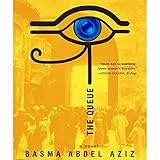
- Audible Audiobook
- Basma Abdel Aziz (Author) - Mark Bramhall (Narrator)
- English (Publication Language)
- 07/12/2016 (Publication Date) - Random House Audio (Publisher)
The Allegorical Framework
The novel operates as a potent allegory for authoritarian regimes and the psychological impact of systemic oppression. The “Queue” itself is not merely a physical line but a state of being, a metaphor for a life defined by perpetual waiting and submission to an inscrutable, all-powerful bureaucracy. This is not a narrative about a specific political regime but a universal exploration of the experience of living under oppressive structures that systematically erode human dignity and agency. The city itself, where the Queue exists, becomes a character, a suffocating entity that dictates every aspect of its inhabitants’ lives.
Strengths and Limitations of The Queue
| Feature | Strength | Limitation |
|---|---|---|
| Thematic Depth | Offers a profound and unflinching exploration of societal control, the dehumanizing effects of bureaucracy, and the resilience of the human spirit. | The allegorical nature, while powerful, can sometimes overshadow narrative momentum, requiring significant reader interpretation and patience. |
| Atmosphere | Masterfully constructs an atmosphere of suffocating stasis, pervasive dread, and existential waiting, creating a deeply immersive experience. | The pervasive bleakness and lack of conventional resolution can be overwhelming for readers seeking lighter or more hopeful narratives. |
| Prose Style | The precise, deliberate, and often stark prose style effectively mirrors the sterile, dehumanizing nature of the world depicted. | This detached writing style may be perceived as unemotional or lacking in conventional narrative warmth by some readers. |
| Originality | Provides a unique and potent metaphor for a specific, insidious form of societal dysfunction, distinct from more common dystopian tropes. | The slow pace and abstract focus, while serving the thematic goals, might alienate readers who prefer action-driven plots or strong character arcs. |
Comparison Framework: Dystopian Novels
When evaluating The Queue, comparing it to other prominent dystopian works highlights its unique position and thematic emphasis.
| Novel Title | Primary Focus | Pacing | Character Development | Allegorical Weight |
|---|---|---|---|---|
| The Queue by Basma Abdel Aziz | Systemic oppression, bureaucratic control, existential waiting | Slow, deliberate | Archetypal | Very High |
| Nineteen Eighty-Four by George Orwell | Totalitarian surveillance, thought control, political power | Moderate | Strong | High |
| The Handmaid’s Tale by Margaret Atwood | Theocracy, gender subjugation, individual resistance | Moderate | Strong | High |
| Brave New World by Aldous Huxley | Social conditioning, consumerism, manufactured happiness | Moderate | Moderate | High |
| Fahrenheit 451 by Ray Bradbury | Censorship, conformity, the value of knowledge | Moderate to Fast | Strong | High |
Decision Checklist for Reading The Queue
Use this checklist to determine if The Queue aligns with your reading preferences and expectations.
- [ ] Do you actively seek out novels that function as political or social allegories?
- [ ] Are you comfortable with and appreciative of a slow, deliberate narrative pace that prioritizes atmosphere and theme?
- [ ] Do you find value in literature that explores the psychological and societal impact of oppressive systems?
- [ ] Are you interested in dissecting the mechanics of bureaucracy and its role in controlling populations?
- [ ] Are you prepared for a narrative that offers little in the way of conventional resolution or overt optimism?
- [ ] Do you enjoy works that employ a stark, critical, and often bleak examination of societal control?
Step-by-Step Plan for Engaging with The Queue
Approaching The Queue with a specific mindset can significantly enhance comprehension and appreciation of its complex themes.
1. Engage with the Premise of Perpetual Waiting: Understand that “The Queue” is not a temporary inconvenience but a fundamental state of being, a metaphor for a life defined by submission and the absence of progress.
- Action: Focus on early descriptions of the Queue’s pervasive and inescapable influence on daily life.
- What to Look For: The normalization of waiting, the rituals surrounding it, and the psychological impact on individuals.
- Mistake: Assuming the Queue is a literal, temporary line that will eventually dissipate or be resolved.
2. Observe the Absurdity of the Bureaucracy: Pay close attention to the intricate, often nonsensical rules, procedures, and decrees that govern the characters’ existence.
- Action: Track examples of illogical mandates and their tangible consequences on the characters’ lives and aspirations.
- What to Look For: The disconnect between bureaucratic logic and human needs, the arbitrary nature of power.
- Mistake: Dismissing the bureaucracy as mere plot device or gratuitous absurdity; it is the central antagonist and the embodiment of the system.
3. Analyze Character Function within the System: Recognize that characters often serve as archetypes or embodiments of societal roles and responses within the oppressive system, rather than fully developed individuals.
- Action: Observe how individual desires, ambitions, and emotions are systematically suppressed or redefined by the collective necessity of the Queue.
- What to Look For: How characters adapt, resist (often passively), or are crushed by the system.
- Mistake: Expecting deep psychological exploration or traditional character arcs for each individual; their significance lies in their function within the allegory.
4. Identify and Trace Thematic Threads: Focus on the overarching themes of power, control, the erosion of individuality, the nature of hope (or its absence), and the cyclicality of oppression.
- Action: Note recurring symbols and motifs related to waiting, silence, submission, and the physical environment of the city.
- What to Look For: The consistent reinforcement of the oppressive atmosphere and the mechanisms of control.
- Mistake: Getting lost in plot minutiae and failing to grasp the broader allegorical message about societal stagnation and control.
5. Consider the Ending’s Implications: The conclusion is not a traditional resolution but an affirmation and continuation of the established state, emphasizing the enduring nature of the oppressive system.
- Action: Reflect on the final image or statement and its resonance with the earlier themes and the overall allegorical intent.
- What to Look For: The sense of ongoing stasis, the lack of escape, and the implications for the future within this world.
- Mistake: Seeking a conventional happy, tragic, or even a definitive ending; the novel’s power lies in its depiction of an unending condition.
Common Mistakes in Reading The Queue
- Mistake: Expecting a traditional plot arc with a clear beginning, rising action, climax, and resolution.
- Why it matters: The Queue is structured around a state of being and systemic critique rather than a sequence of events designed to lead to a conventional narrative conclusion. This expectation can lead to frustration.
- Fix: Approach the novel as an immersive experience of a particular societal condition, focusing on atmosphere, thematic development, and the exploration of a state of perpetual waiting.
- Mistake: Focusing primarily on individual character motivations and development.
- Why it matters: Characters in The Queue often serve as archetypes or embodiments of societal roles and responses to the system. Their individual arcs are secondary to their function within the larger allegorical structure.
- Fix: Analyze characters as components of the overarching allegorical framework, observing how they represent different facets of life under oppression.
- Mistake: Dismissing the bureaucracy as simply “bad writing” or illogical for the sake of plot.
- Why it matters: The irrationality, inefficiency, and soul-crushing nature of the bureaucracy are central to the novel’s critique
Decision Rules
- If reliability is your top priority for The Queue by Basma Abdel Aziz, choose the option with the strongest long-term track record and support.
- If value matters most, compare total ownership cost instead of headline price alone.
- If your use case is specific, prioritize fit-for-purpose features over generic ‘best overall’ claims.