Axie Oh’s ‘The Girl Who Fell Beneath The Sea
The Girl Who Fell Beneath The Sea by Axie Oh: Quick Answer
- “The Girl Who Fell Beneath The Sea by Axie Oh” is a young adult fantasy novel that reimagines a Korean folktale, focusing on themes of sacrifice, love, and destiny.
- Its strengths lie in its evocative atmosphere, rich mythological world-building, and compelling character development, particularly Mina’s journey.
- Readers who appreciate emotionally resonant stories with a strong folkloric basis and a contemplative pace will find this novel rewarding.
Who This Is For
- Young adult readers seeking a beautifully written fantasy novel with a cultural foundation distinct from Western European folklore.
- Individuals interested in mythological retellings and stories that explore complex emotional landscapes and the nature of sacrifice.
What To Check First
- Thematic Resonance: Consider if themes of sacrifice, duty, and the weight of tradition appeal to your reading preferences. The novel engages deeply with these concepts.
- Pacing and Atmosphere: The book prioritizes atmosphere and character interiority, which can result in a slower narrative pace. If you prefer action-driven plots, this may require adjustment.
- Folkloric Elements: While accessible to newcomers, an appreciation for Korean mythology will likely enhance the reading experience by providing context for the world and its characters.
- Character-Driven Narrative: The story’s success hinges on Mina’s internal journey and her relationships. If you prioritize plot over deep character exploration, this might be a point of consideration.
Step-by-Step Plan for Engaging with The Girl Who Fell Beneath The Sea
This structured approach is designed to maximize comprehension and appreciation of “The Girl Who Fell Beneath The Sea by Axie Oh,” while highlighting potential interpretive challenges.
1. Understand the Core Myth: Begin by grasping the premise of the village’s annual sacrifice to the Sea God and Mina’s decision to take her brother’s place.
- What to look for: The desperation of the villagers and the profound love that drives Mina’s choice.
- Mistake: Viewing Mina’s sacrifice as solely a plot device; it is the emotional and thematic engine of the narrative.
2. Analyze Mina’s Internal Conflict: Focus on Mina’s motivations, fears, and hopes as she enters the spirit realm.
- What to look for: Her internal struggle between duty, love, and a nascent desire for self-determination.
- Mistake: Underestimating Mina’s agency; her actions are driven by complex emotions and a desire to understand, not just fulfill a role.
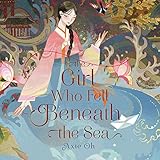
- Audible Audiobook
- Axie Oh (Author) - Rosa Escoda (Narrator)
- English (Publication Language)
- 02/22/2022 (Publication Date) - Dreamscape Media, LLC (Publisher)
3. Explore the Spirit Realm’s Ecology: Pay attention to the descriptions of the Sea God’s domain and its inhabitants.
- What to look for: The unique blend of beauty and danger, and how the spirits reflect the land’s fractured state.
- Mistake: Treating the spirit realm as a generic fantasy setting; its specific cultural and emotional resonance is key to the story’s impact.
4. Deconstruct the Sea God’s Character: Observe the Sea God’s portrayal beyond the initial fearsome reputation.
- What to look for: Signs of grief, loneliness, and the burden of his responsibilities.
- Mistake: Assuming a simple villainous role; the narrative deliberately complicates his character, revealing layers of tragedy.
5. Identify the True Nature of the “Curse”: Look beyond the immediate problem of the sacrifices to the underlying cause affecting the Sea God and the land.
- What to look for: The historical grievances and emotional wounds that perpetuate the cycle of suffering.
- Mistake: Focusing solely on Mina’s quest to save her brother; the story is about healing a deeper, systemic imbalance.
6. Evaluate the Theme of Sacrifice: Consider the different forms sacrifice takes and its consequences.
- What to look for: The contrast between mandated sacrifices and Mina’s chosen act, and the ethical implications.
- Mistake: Accepting sacrifice as inherently noble; the novel prompts critical reflection on its necessity and cost.
7. Assess the Relationship Development: Analyze the evolving dynamic between Mina and the Sea God.
- What to look for: The progression from fear and suspicion to understanding and a complex bond.
- Mistake: Expecting a straightforward romantic arc; the relationship is nuanced and intertwined with the overarching conflict.
The Girl Who Fell Beneath The Sea by Axie Oh: Unpacking Thematic Depth
This section examines the narrative’s engagement with Korean folklore and its thematic strengths, alongside potential reader disconnects.
Axie Oh’s “The Girl Who Fell Beneath The Sea by Axie Oh” draws heavily from the Korean folktale of Shim Cheong, a story of filial piety and sacrifice. Oh transforms this narrative by focusing on Mina, a young woman who volunteers to be sacrificed to the Sea God to save her village and her brother. This foundational element allows the novel to explore profound themes: the nature of sacrifice, the weight of familial love, and the struggle against predetermined fates. The novel excels in creating a palpable atmosphere, rendering the spirit realm with a dreamlike quality that is both beautiful and unsettling. The world-building is intricate, drawing on Korean mythology to populate the Sea God’s domain with compelling spirits and deities, each serving a purpose in the unfolding narrative.
However, a common reader pitfall lies in expecting a fast-paced, action-heavy plot. “The Girl Who Fell Beneath The Sea” prioritizes emotional depth and atmospheric immersion, meaning the narrative unfolds at a more deliberate rhythm. For readers accustomed to constant plot propulsion, certain passages might feel slow. This is not a flaw, but a stylistic choice that allows for deeper engagement with Mina’s internal world and the complexities of the spirit realm. For example, detailed descriptions of the underwater city and Mina’s introspective moments, while crucial to the story’s emotional core, contribute to its contemplative nature. This focus on internal experience and thematic exploration is a strength, but one that requires the reader to lean into its specific tempo.
BLOCKQUOTE_0
This quote highlights a critical interpretive challenge within the novel: the subversion of simplistic antagonist archetypes. It urges readers to look beyond initial perceptions of the Sea God and consider the profound, often tragic, motivations that drive powerful beings.
Expert Tips for Reading The Girl Who Fell Beneath The Sea
To enhance your reading experience and avoid common pitfalls, consider these expert-aligned strategies.
- Tip 1: Embrace the Metaphorical Sacrifice.
- Actionable Step: As you read, actively consider what each act of sacrifice (Mina’s, the villagers’, the Sea God’s past) represents beyond the literal act. Is it a metaphor for unresolved grief, societal pressure, or personal compromise?
- Common Mistake to Avoid: Treating sacrifice as purely a plot device for moving the story forward, rather than a central thematic exploration of cost and consequence. For instance, the initial sacrifice of villagers to the Sea God is presented as a necessary evil, but the narrative pushes readers to question the true cost of such enforced rituals.
- Tip 2: Track the Sea God’s Emotional Arc.
- Actionable Step: Pay close attention to the Sea God’s dialogue, internal thoughts (where revealed), and interactions with Mina. Note moments of melancholy, anger, or regret, and try to connect them to the historical context provided.
- Common Mistake to Avoid: Labeling the Sea God as a one-dimensional villain. The novel deliberately complicates his character, making it crucial to observe his journey from seemingly detached deity to a figure wrestling with immense sorrow and responsibility, as seen in his interactions with Mina that reveal his past burdens.
- Tip 3: Look for Subversions of Folklore Tropes.
- Actionable Step: Identify elements that seem familiar from other myths or folktales and then note how Axie Oh twists or reinterprets them within the context of Korean mythology and Mina’s specific journey.
- Common Mistake to Avoid: Expecting a straightforward, literal adaptation of the Shim Cheong folktale. The novel uses the folktale as a springboard, introducing unique character motivations and thematic layers, such as the exploration of the Sea God’s own fractured state, which goes beyond the original legend’s focus on filial piety.
Common Mistakes
- Mistake: Overlooking the nuances of the Sea God’s character.
- Why it matters: The Sea God is portrayed not as purely malevolent but as a figure burdened by grief and ancient responsibility. Misinterpreting him as a simple villain misses the story’s exploration of complex motivations and past traumas.
- Fix: Read with an eye for the Sea God’s vulnerability and the historical context that shapes his actions, rather than solely focusing on his destructive power.
- Mistake: Underestimating Mina’s active role in her fate.
- Why it matters: While she is a sacrifice, Mina is not a passive victim. Her decision is an act of profound love and a conscious choice to defy a system she finds unjust.
- Fix: Pay close attention to Mina’s internal monologues and her deliberate actions. Recognize her agency in seeking understanding and forging her own path within the spirit realm.
- Mistake: Focusing solely on the romantic subplot.
- Why it matters: While a significant element, the romance is one thread within a larger tapestry of themes. Overemphasizing it can detract from the novel’s deeper explorations of family, sacrifice, and the breaking of destructive cycles.
- Fix: Appreciate the romantic development as part of Mina’s broader journey of self-discovery and healing, but give equal consideration to her familial bonds and her quest for systemic change.
- Mistake: Expecting a direct, literal retelling of the Shim Cheong folktale.
- Why it matters: Axie Oh uses the folktale as inspiration, not a strict blueprint. The novel introduces new characters,
Quick Comparison
| Option | Best for | Pros | Watch out |
|---|---|---|---|
| Quick Answer | General use | “The Girl Who Fell Beneath The Sea by Axie Oh” is a young adult fantasy novel… | Mistake: Viewing Mina’s sacrifice as solely a plot device; it is the emotiona… |
| Who This Is For | General use | Its strengths lie in its evocative atmosphere, rich mythological world-buildi… | Mistake: Underestimating Mina’s agency; her actions are driven by complex emo… |
| What To Check First | General use | Readers who appreciate emotionally resonant stories with a strong folkloric b… | Mistake: Treating the spirit realm as a generic fantasy setting; its specific… |
| Step-by-Step Plan for Engaging with The Girl Who Fell Beneath The Sea | General use | Young adult readers seeking a beautifully written fantasy novel with a cultur… | Mistake: Assuming a simple villainous role; the narrative deliberately compli… |
Decision Rules
- If reliability is your top priority for The Girl Who Fell Beneath The Sea by Axie Oh, choose the option with the strongest long-term track record and support.
- If value matters most, compare total ownership cost instead of headline price alone.
- If your use case is specific, prioritize fit-for-purpose features over generic ‘best overall’ claims.