Arthur Schnitzler’s Dream Story: A Psychological Exploration
This novella offers a deep, often unsettling, exploration of consciousness. It is for readers who appreciate literary modernism and are comfortable with ambiguity.
Dream Story by Arthur Schnitzler: Quick Answer
- Dream Story by Arthur Schnitzler is a novella that meticulously dissects the subjective experience of its protagonist, blurring the lines between dream, desire, and waking reality through its fluid narrative.
- Its strength lies in its unflinching psychological depth and modernist exploration of consciousness, offering a nuanced, if disorienting, look at identity and perception.
- Readers seeking conventional plot structures or definitive resolutions may find its deliberate ambiguity and introspective focus challenging.
Dream Story by Arthur Schnitzler: Who This Is For
- Readers interested in early 20th-century literature that engages with psychological themes, particularly those that prefigure or run parallel to psychoanalytic thought.
- Those who appreciate narrative ambiguity and works that prioritize subjective experience and the exploration of desire over linear plot progression.
What to Check First
- Author’s Background: Arthur Schnitzler, a physician by training, consistently infused his literary works with a deep understanding of human psychology and the complexities of the mind. His medical background informs his nuanced portrayal of internal states.
- Literary Context: The novella is a significant work of literary modernism, characterized by experimentation with narrative form, a focus on interiority, and a questioning of objective reality. It emerged during a period of intense intellectual and artistic upheaval.
- Thematic Core: Be prepared for an exploration of themes such as eroticism, the fluidity of self, and the porous boundary between what is real and what is imagined, which are central to Dream Story by Arthur Schnitzler.
- Narrative Structure: The writing style is often associative and dreamlike, mirroring the protagonist’s internal experience rather than adhering to strict chronological order. This requires an engaged and patient reader.
Step-by-Step Plan for Understanding Dream Story
1. Initial Immersion: Absorb the Atmosphere.
- Action: Read the novella through once without immediate analytical pressure.
- What to Look For: The prevailing mood, the subtle shifts in the protagonist’s perception, and the emotional undercurrents. Note moments where the narrative feels particularly fluid or disorienting.
- Mistake to Avoid: Attempting to impose a rigid logical framework onto the text during this first pass; allow the subjective experience to unfold naturally.
For a concise overview of Arthur Schnitzler’s ‘Dream Story,’ this section highlights its core strengths and potential challenges for readers. It’s a great starting point to grasp the novella’s essence.
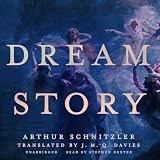
- Audible Audiobook
- Arthur Schnitzler (Author) - Stephen Dexter (Narrator)
- English (Publication Language)
- 10/11/2022 (Publication Date) - Blackstone Publishing (Publisher)
2. Second Reading: Identify Recurring Motifs.
- Action: Reread the text, actively highlighting or noting recurring images, objects, or phrases.
- What to Look For: Elements that appear repeatedly and seem to carry symbolic weight, often offering clues to the protagonist’s underlying desires or anxieties. For example, recurring symbols might relate to themes of pursuit or transformation.
- Mistake to Avoid: Over-interpreting isolated symbols without considering their broader context within the narrative’s thematic development.
3. Analyze the Protagonist’s Internal World.
- Action: Focus intently on the thoughts, feelings, and perceptions of the central character.
- What to Look For: Inconsistencies in their behavior or justifications, and the ways their internal monologue diverges from external events. Observe how Schnitzler depicts the protagonist’s descent into a more dreamlike state.
- Mistake to Avoid: Evaluating the protagonist solely based on external actions; their internal landscape is the primary locus of the story.
4. Examine the Dream-Reality Dichotomy.
- Action: Trace instances where the distinction between waking life and dream sequences becomes indistinct or indistinguishable.
- What to Look For: Moments of uncanny coincidence, abrupt transitions, or events that defy rational explanation within a conventional understanding of reality. This is a critical aspect of Dream Story by Arthur Schnitzler.
- Mistake to Avoid: Assuming a clear, consistent separation between dream and reality for the protagonist; the novella deliberately blurs this boundary.
5. Embrace the Novella’s Ambiguity.
- Action: Reflect on the unanswered questions and unresolved narrative threads.
- What to Look For: The absence of definitive explanations for certain events or character motivations. The power of the novella lies in this inherent uncertainty, prompting reader interpretation.
- Mistake to Avoid: Demanding a neat resolution or a single “correct” interpretation; the work’s impact stems from its open-ended nature.
6. Connect to Psychological Concepts.
- Action: Consider early psychological theories or concepts relevant to the period in which Schnitzler was writing.
- What to Look For: How the novella’s portrayal of subconscious drives, repressed desires, and subjective perception aligns with or anticipates developing psychological thought. For instance, observe how the protagonist’s actions seem driven by impulses not fully acknowledged by his conscious mind.
- Mistake to Avoid: Imposing anachronistic psychological interpretations without acknowledging the historical context of Schnitzler’s writing and its relationship to contemporary thought.
Common Myths
- Myth: The novella is a direct, allegorical representation of Freudian concepts.
- Why it Matters: This interpretation risks oversimplifying Schnitzler’s work by forcing it into a pre-defined theoretical box. Schnitzler was exploring these themes independently and concurrently with the development of psychoanalysis, and his focus was artistic rather than purely scientific.
- Fix: Approach the text as a literary exploration of psychological themes that resonates with, rather than strictly illustrates, psychoanalytic ideas. Recognize the nuance and subjective nature of Schnitzler’s portrayal, which predates widespread Freudian influence in literary criticism.
- Myth: The protagonist’s experiences are solely indicative of a severe mental disorder.
- Why it Matters: This perspective can lead to a reductive understanding of the novella, potentially overlooking its broader philosophical inquiries into the nature of reality, desire, and perception. It reduces the literary work to a clinical diagnosis.
- Fix: Consider the protagonist’s journey as an exploration of the human psyche’s susceptibility to suggestion, longing, and the porousness of perceived reality, rather than solely a clinical diagnosis. The narrative is a literary study of consciousness, not a medical case report.
- Myth: The narrative’s lack of a conventional plot is a stylistic weakness.
- Why it Matters: This judgment fails to appreciate the modernist aesthetic and Schnitzler’s deliberate choice to prioritize internal experience over external action. It dismisses a key element of the work’s artistic intent.
- Fix: Understand that the fluid, associative structure is a conscious artistic decision designed to mirror the protagonist’s psychological state and the ephemeral quality of dreams. The plot is internalized.
Decision Criteria for Engaging with Dream Story
When considering whether to engage with Dream Story by Arthur Schnitzler, one crucial decision criterion is your tolerance for narrative ambiguity.
- High Ambiguity Tolerance: If you find satisfaction in exploring open-ended narratives that invite multiple interpretations and do not offer definitive answers, this novella will likely be a deeply rewarding experience. Its strength lies precisely in its refusal to provide easy conclusions, allowing for prolonged contemplation of its themes. For example, the ending’s open nature encourages reflection on the protagonist’s ultimate state of mind.
- Low Ambiguity Tolerance: If you prefer stories with clear plotlines, discernible character arcs, and concrete resolutions, “Dream Story” may prove frustrating. Its power is derived from its psychological depth and the exploration of subjective states, which inherently resist straightforward interpretation. If you need a story to tie up loose ends, this might not be the best choice.
Expert Tips for Deeper Understanding
1. Focus on Sensory Details:
- Action: Pay close attention to the descriptions of sights, sounds, and physical sensations within the novella. Schnitzler uses these to ground the reader in the protagonist’s subjective reality.
- Common Mistake to Avoid: Overlooking these details as mere descriptive filler; they often serve as anchors for the protagonist’s emotional state and the shifting nature of reality, providing concrete anchors in an otherwise fluid narrative.
2. Map the Protagonist’s Desires:
- Action: Identify and list the protagonist’s explicit and implicit desires as they emerge throughout the narrative. Note how these desires influence his perceptions and actions.
- Common Mistake to Avoid: Assuming desires are static; note how they evolve, conflict, and manifest in unexpected ways, often driving the narrative’s dreamlike progression. For instance, a fleeting thought can rapidly escalate into a perceived event.
3. Consider the Role of the Unconscious:
- Action: Reflect on how unconscious drives and hidden impulses seem to influence the protagonist’s actions and perceptions. Look for moments where his behavior seems to contradict his stated intentions.
- Common Mistake to Avoid: Attributing all actions to conscious intent; Schnitzler’s work emphasizes the powerful, often unseen, forces shaping human behavior, making the unconscious a primary driver.
BLOCKQUOTE_0
Strengths and Limitations
Strengths
- Psychological Acuity: Schnitzler offers a profound and unsettling portrayal of the human psyche, capturing the disorienting experience of a mind grappling with its own subconscious desires and the perceived reality around it. The novella provides a compelling exploration of subjective consciousness, making it a valuable study for those interested in internal states.
- Atmospheric Prose: The writing is evocative and dreamlike, masterfully creating a palpable sense of unease and disorientation that perfectly complements the narrative’s themes. This immersive quality draws the reader into the protagonist’s world.
- Thematic Depth: Its examination of identity, desire, and the subjective nature of reality remains potent and relevant, offering a timeless commentary on human behavior. The exploration of how perception shapes reality is particularly enduring.
Limitations
- Narrative Ambiguity:
Quick Comparison
| Option | Best for | Pros | Watch out |
|---|---|---|---|
| Quick Answer | General use | Dream Story by Arthur Schnitzler is a novella that meticulously dissects the… | Mistake to Avoid: Attempting to impose a rigid logical framework onto the tex… |
| Who This Is For | General use | Its strength lies in its unflinching psychological depth and modernist explor… | Mistake to Avoid: Over-interpreting isolated symbols without considering thei… |
| What to Check First | General use | Readers seeking conventional plot structures or definitive resolutions may fi… | Mistake to Avoid: Evaluating the protagonist solely based on external actions… |
| Step-by-Step Plan for Understanding Dream Story | General use | Readers interested in early 20th-century literature that engages with psychol… | Mistake to Avoid: Assuming a clear, consistent separation between dream and r… |
Decision Rules
- If reliability is your top priority for Dream Story by Arthur Schnitzler, choose the option with the strongest long-term track record and support.
- If value matters most, compare total ownership cost instead of headline price alone.
- If your use case is specific, prioritize fit-for-purpose features over generic ‘best overall’ claims.