Arthur Ransome’s Classic Children’s Adventure, Swallows And Amazons
Arthur Ransome’s Swallows and Amazons invites young readers into a world of imaginative adventure on the water, focusing on the sailing and exploration activities of the Walker and Blackett children. This narrative, set in the Lake District, emphasizes self-reliance, problem-solving, and the joys of outdoor play.
Swallows and Amazons by Arthur Ransome: Quick Answer
- Best for: Children aged 8-12 who enjoy stories of outdoor adventure, sailing, and imaginative play.
- Key Strengths: Fosters independence, encourages practical skills, and offers a rich, detailed world for imaginative engagement.
- Potential Drawbacks: Pacing can be slow for some modern readers; reliance on older nautical terminology may require some explanation.
Swallows and Amazons by Arthur Ransome: Who This Is For
- Readers who appreciate detailed descriptions of sailing, camping, and exploration, valuing realism within an adventurous framework.
- Young readers looking for stories that celebrate resourcefulness and the rewards of mastering new skills.
What to Check First
Before diving into the adventures of the Walker and Blackett children, consider these points:
- Reader’s Interest in Outdoor Activities: The book heavily features sailing, camping, and exploring. A child uninterested in these themes may find the narrative less engaging. For example, if a child prefers indoor activities, the detailed descriptions of rigging sails or setting up a campfire might not resonate.
- Pacing Tolerance: Ransome’s style is deliberate, focusing on the process of exploration and problem-solving. Readers accustomed to faster-paced plots might find the early chapters slow. A reader expecting constant action might disengage when the children spend a chapter meticulously planning their next move or charting a course.
- Familiarity with Nautical Terms: While explained through context, some sailing terms might be new. A brief glossary or parental explanation could enhance comprehension. For instance, terms like “tack,” “jib,” or “boom” might initially be unfamiliar without context.
- Appreciation for Immersive Detail: The strength of Swallows and Amazons by Arthur Ransome lies in its rich, evocative descriptions of the natural environment and the children’s activities. Readers who enjoy this level of detail will be rewarded. A reader who appreciates descriptive prose will find joy in Ransome’s rendering of the wind on the water or the details of their camp.
For those eager to embark on this classic journey, Arthur Ransome’s Swallows and Amazons is the definitive edition to capture the spirit of childhood adventure. It’s a foundational read for anyone who loves tales of exploration.
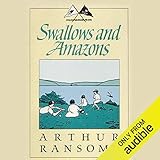
- Audible Audiobook
- Arthur Ransome (Author) - Alison Larkin (Narrator)
- English (Publication Language)
- 09/18/2008 (Publication Date) - Audible Studios (Publisher)
Step-by-Step Plan for Engaging with Swallows and Amazons
1. Introduce the Setting and Characters: Begin by reading the initial chapters that establish the holiday setting on an island and introduce the two families, the Swallows (the Walker children) and the Amazons (the Blackett sisters).
- Action: Read aloud or independently.
- What to Look For: The children’s excitement for their sailing holiday and their initial interactions. For example, observe how John Walker, as the eldest, takes on responsibility, and how Nancy Blackett asserts her leadership.
- Mistake: Skipping the early setup, missing the foundation of the children’s independence and the rules they establish for themselves. This can lead to a misunderstanding of the children’s agency and the self-imposed structure of their adventures.
2. Focus on the Sailing and Exploration: As the children set sail in their boat, the Swallow, pay close attention to their navigation, camping arrangements, and discovery of new areas.
- Action: Discuss the challenges of sailing and the children’s solutions.
- What to Look For: How the children manage their boat, food, and shelter, demonstrating self-sufficiency. For instance, note how they meticulously check their provisions before a journey or how they rig their tents.
- Mistake: Overlooking the practical details of their adventure, viewing it solely as fantasy rather than a depiction of achievable outdoor skills. This can diminish the educational value of the narrative.
3. Engage with the “Native” and “Pirate” Dynamics: Observe how the children create their own games and rivalries, particularly their roles as “natives” of their island and their encounters with the mysterious “pirates.”
- Action: Discuss the imaginative play and its rules.
- What to Look For: The children’s ability to sustain complex imaginary scenarios and their negotiation of roles. For example, analyze the elaborate rules they create for their “native” society or their strategic planning when encountering the “pirates.”
- Mistake: Dismissing the imaginative play as trivial, failing to recognize its importance in developing creativity and social interaction. This can lead to underestimating the book’s contribution to understanding childhood development.
4. Examine Problem-Solving Scenarios: Note instances where the children face predicaments, such as navigating difficult weather, managing supplies, or resolving disputes, and how they work through them.
- Action: Pause to consider how you would solve similar problems.
- What to Look For: The children’s logical thinking and collaborative efforts to overcome obstacles. For example, when the Swallow is becalmed, observe their systematic approach to rationing food and water.
- Mistake: Assuming solutions appear magically, rather than recognizing the deliberate planning and effort involved. This can create an unrealistic expectation of problem-solving.
5. Appreciate the Environmental Descriptions: Take time to absorb Ransome’s detailed descriptions of the Lake District landscape, the weather, and the natural world.
- Action: Visualize the scenes described.
- What to Look For: The sensory details that bring the setting to life, from the feel of the wind to the sounds of the water. Ransome’s descriptions of the “glassy” lake or the “whistling” wind are key examples.
- Mistake: Rushing through descriptive passages, missing the immersive quality that anchors the adventure in a tangible reality. This can lead to a superficial reading of the text.
6. Reflect on the Themes of Independence and Responsibility: Consider the underlying messages about growing up, taking ownership of actions, and the rewards of self-reliance.
- Action: Discuss what the children learn from their experiences.
- What to Look For: The development of the characters’ maturity and their understanding of consequences. For instance, observe how Dick and Dorothea learn from their mistakes, such as when they misjudge the tides.
- Mistake: Focusing only on the plot, without considering the character growth and thematic depth. This can lead to a missed opportunity for deeper literary analysis.
Common Myths About Swallows and Amazons
- Myth: Swallows and Amazons is simply a lighthearted children’s romp with no deeper meaning.
- Why it Matters: This view overlooks Ransome’s deliberate crafting of a narrative that subtly champions self-reliance, practical skills, and the value of imaginative play as tools for development. It can lead readers to dismiss the book’s educational and developmental value.
- Fix: Read with an eye for the children’s decision-making processes, their adherence to self-imposed rules, and the way their adventures build competence and confidence. For example, analyze the careful planning that goes into their expeditions, which reflects a maturity beyond mere play.
- Myth: The book is outdated and irrelevant for modern children due to its focus on sailing and older terminology.
- Why it Matters: While the specific activities are historical, the core themes of adventure, problem-solving, friendship, and learning through experience are timeless. The perceived “outdatedness” can be an opportunity for discussion and learning.
- Fix: Introduce the book as a window into a different era of childhood leisure, using the nautical terms as learning opportunities. Focus on the universal appeal of exploration and the satisfaction of mastering challenges. For instance, discuss how the children’s need for resourcefulness mirrors modern challenges in different contexts.
- Myth: The children are unsupervised and their actions are reckless.
- Why it Matters: This misinterprets the children’s autonomy. Ransome carefully establishes the parameters of their freedom, with clear boundaries set by parents and the children’s own understanding of safety and responsibility.
- Fix: Pay attention to the initial conversations with parents, the children’s own discussions about safety, and the implicit trust placed in them, which they work hard to maintain. For example, the parents’ clear instructions and the children’s consistent reporting back demonstrate a framework of responsible freedom, not neglect.
Expert Tips for Reading Swallows and Amazons
- Tip 1: Embrace the Nautical Terminology.
- Actionable Step: Encourage readers to pause when unfamiliar sailing terms appear and try to infer their meaning from the context. For instance, if “reefing the sail” is mentioned during a storm, the context suggests it’s an action to reduce the sail’s surface area for safety.
- Common Mistake to Avoid: Getting bogged down by unfamiliar words and losing the narrative flow. Instead of immediately looking up every term, try to understand its function within the sentence and the overall action.
- Tip 2: Focus on the “How” of the Adventure.
- Actionable Step: Actively look for the practical steps the children take to achieve their goals, whether it’s setting up camp, navigating, or preparing food. For example, when they are building their camp, note the specific materials they use and the techniques they employ.
- Common Mistake to Avoid: Skimming over the procedural details and focusing only on the outcome. This can lead to a superficial understanding of the children’s resourcefulness and the skills Ransome is subtly teaching.
- Tip 3: Discuss the Children’s Decision-Making.
- Actionable Step: After significant events or challenges, pause to discuss the choices the children made and why they made them. For instance, after a close call with another boat, discuss John’s decision-making process and whether Nancy’s impulsiveness played a role.
- **Common Mistake
Quick Comparison
| Option | Best for | Pros | Watch out |
|---|---|---|---|
| Swallows and Amazons by Arthur Ransome Quick Answer | General use | Best for: Children aged 8-12 who enjoy stories of outdoor adventure, sailing,… | Mistake: Skipping the early setup, missing the foundation of the children’s i… |
| Swallows and Amazons by Arthur Ransome Who This Is For | General use | Key Strengths: Fosters independence, encourages practical skills, and offers… | Mistake: Overlooking the practical details of their adventure, viewing it sol… |
| What to Check First | General use | Potential Drawbacks: Pacing can be slow for some modern readers; reliance on… | Mistake: Dismissing the imaginative play as trivial, failing to recognize its… |
| Step-by-Step Plan for Engaging with Swallows and Amazons | General use | Readers who appreciate detailed descriptions of sailing, camping, and explora… | Mistake: Assuming solutions appear magically, rather than recognizing the del… |
Decision Rules
- If reliability is your top priority for Swallows and Amazons by Arthur Ransome, choose the option with the strongest long-term track record and support.
- If value matters most, compare total ownership cost instead of headline price alone.
- If your use case is specific, prioritize fit-for-purpose features over generic ‘best overall’ claims.