Arnaldur Indriðason’s Jar City: An Icelandic Crime Novel
Jar City by Arnaldur Indriðason: Quick Answer
- Jar City by Arnaldur Indriðason offers a deliberate, atmospheric dive into Icelandic society, prioritizing mood and character over rapid plot progression.
- Its strengths lie in its evocative setting, the complex portrayal of Inspector Erlendur, and its exploration of challenging social and ethical themes.
- This novel is best suited for readers who appreciate thoughtful, character-driven mysteries and the distinctive tone of Nordic noir.
Who This Is For
- Readers seeking a slow-burn mystery that emphasizes atmosphere and social commentary.
- Fans of Nordic noir who appreciate character depth and a strong sense of place.
What to Check First
- Pacing Preference: If you require a fast-paced plot with frequent twists, the deliberate, methodical pace of Jar City might not align with your expectations.
- Tolerance for Grim Themes: The novel tackles difficult subjects such as genetic manipulation, societal neglect, and the lasting impact of past actions.
- Interest in Icelandic Society: The narrative is deeply rooted in Iceland’s social fabric, history, and cultural nuances, which are integral to the mystery.
- Familiarity with Inspector Erlendur: While the novel can function as a standalone, prior knowledge of Inspector Erlendur Sveinsson’s character from other books can enhance the appreciation of his weariness and personal context.
Step-by-Step Plan for Reading Jar City
1. Engage with the Setting: Immerse yourself in the descriptions of Reykjavik and the surrounding Icelandic landscape.
- What to look for: The stark beauty, the sense of isolation, and how the environment reflects the characters’ internal states.
- Mistake to avoid: Treating the setting as mere backdrop; it is a crucial element that shapes the mood and thematic resonance of the novel.
2. Focus on Inspector Erlendur: Observe Erlendur’s investigative methods and his personal reflections.
- What to look for: His quiet persistence, his empathy for victims, and the melancholic undercurrents of his character.
- Mistake to avoid: Expecting a conventional, hard-boiled detective; Erlendur is introspective, weary, and driven by a sense of duty.
3. Unravel the Central Mystery: Follow the investigation into the murder and the discovery of the unusual genetic condition.
- What to look for: The gradual unveiling of clues and the ethical questions raised by the scientific element.
- Mistake to avoid: Rushing through the procedural details; these are essential for understanding the novel’s commentary on science and society.
4. Analyze the Social Commentary: Pay attention to how the novel addresses societal issues.
- What to look for: Connections between the crime and broader social failings, such as the treatment of the marginalized or the consequences of past decisions.
- Mistake to avoid: Viewing the social issues as tangential; they are intrinsically woven into the fabric of the mystery and its resolution.
5. Consider the Novel’s Themes: Reflect on themes of legacy, responsibility, and the enduring impact of past actions.
- What to look for: How the past directly influences the present crime and its resolution.
- Mistake to avoid: Focusing solely on the “whodunit” aspect without appreciating the deeper thematic explorations.
6. Evaluate the Narrative Structure: Observe the deliberate pacing and the emphasis on atmosphere over action.
- What to look for: How the slow build contributes to the overall mood and character development.
- Mistake to avoid: Becoming impatient with the lack of overt thrills; the novel’s power lies in its gradual unfolding and psychological depth.
7. Process the Resolution: Understand the implications of the case’s conclusion and its impact on the characters.
- What to look for: The lingering questions and the sense of closure, or lack thereof, for Erlendur and others.
- Mistake to avoid: Expecting a neat, tidy ending; the resolution often carries the weight of unresolved societal issues.
If you’re looking for a crime novel that truly immerses you in its setting and characters, Arnaldur Indriðason’s Jar City is an excellent choice. It’s a masterclass in atmospheric storytelling.
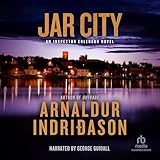
- Audible Audiobook
- Arnaldur Indridason (Author) - George Guidall (Narrator)
- English (Publication Language)
- 07/26/2011 (Publication Date) - Recorded Books (Publisher)
Jar City by Arnaldur Indriðason: A Thematic Deep Dive
Arnaldur Indriðason’s Jar City (original title: Ræningjatríóið) exemplifies the power of atmosphere and character in crime fiction. It eschews the rapid-fire pacing common in many thrillers, opting instead for a deliberate, methodical approach that allows the stark beauty of Iceland and the internal landscapes of its characters to dominate. The novel is less a puzzle to be solved and more a socio-cultural examination, using a murder investigation as a lens to explore the lingering consequences of societal decisions and scientific advancements.
The narrative’s core strength lies in its unflinching portrayal of Reykjavik’s less glamorous aspects, a city grappling with its past and its future. Inspector Erlendur Sveinsson, a figure already etched into the reader’s mind through previous works, serves as an ideal guide through this shadowed urban terrain. His weariness and quiet determination mirror the somber mood of the story. The introduction of a unique genetic element to the murder mystery adds a layer of complexity, pushing the boundaries of traditional crime fiction and prompting contemplation on ethics, identity, and the very definition of humanity. This element is not merely a plot device; it is central to the novel’s thematic concerns regarding legacy and the unintended consequences of human ambition.
BLOCKQUOTE_0
Strengths
- Atmospheric Immersion: Indriðason masterfully conjures the specific mood of Iceland, a landscape that feels as much a character as the people within it. The descriptions of Reykjavik are stark and evocative, contributing significantly to the novel’s sense of place and its often melancholic tone.
- Character Depth: Inspector Erlendur is a richly drawn protagonist, burdened by his past and his profession, yet possessing a deep-seated empathy. His internal struggles and quiet observations add significant weight to the narrative, making the human element paramount.
- Thought-Provoking Themes: The novel delves into complex societal issues, including the treatment of marginalized populations, the ethical implications of genetic research, and the long-term impact of societal neglect. These themes are not superficially addressed but are intrinsically woven into the fabric of the mystery.
Limitations
- Pacing: Readers accustomed to fast-paced thrillers may find the deliberate, almost languid, pace of Jar City to be a significant drawback. The narrative prioritizes mood and character development over plot acceleration.
- Bleak Outlook: The novel consistently maintains a somber and often grim tone, exploring dark aspects of human nature and societal failure. This pervasive bleakness might be off-putting for readers seeking lighter fare.
- Reliance on Previous Knowledge: While Jar City can be read as a standalone, a deeper appreciation of Inspector Erlendur’s character and his established burdens is enhanced by familiarity with his prior cases.
Common Myths About Jar City
- Myth: Jar City is a typical fast-paced detective story.
- Why it matters: This misconception can lead to disappointment if readers expect constant action and rapid plot twists.
- Correction: The novel is characterized by its slow-burn approach, focusing on atmosphere, character introspection, and thematic exploration over plot-driven urgency. The investigative process is detailed and deliberate.
- Myth: The genetic element is a science fiction gimmick.
- Why it matters: Dismissing the genetic aspect as purely for shock value overlooks its integral role in the novel’s thematic concerns and character motivations.
- Correction: The genetic research and its implications are central to the mystery and serve as a powerful metaphor for legacy, societal responsibility, and the unintended consequences of scientific ambition. It drives the plot and deepens the novel’s social commentary.
Expert Tips for Reading Jar City
- Tip: Embrace the atmosphere.
- Actionable Step: Take time to absorb the descriptive passages of Reykjavik and the Icelandic landscape.
- Common Mistake to Avoid: Skimming over descriptive text; these passages are crucial for establishing the novel’s mood and thematic resonance.
- Tip: Focus on Erlendur’s internal journey.
- Actionable Step: Pay close attention to Inspector Erlendur’s thoughts, observations, and personal reflections.
- Common Mistake to Avoid: Treating Erlendur as a mere plot facilitator; his character arc and internal struggles are as important as the case itself.
- Tip: Understand the social context.
- Actionable Step: Consider how the novel critiques Icelandic society and its historical or current issues.
- Common Mistake to Avoid: Reading the social commentary as secondary to the crime; the novel uses the crime to illuminate societal flaws.
Quick Comparison
| Feature | Jar City by Arnaldur Indriðason | Alternative Nordic Noir (e.g., Stieg Larsson) |
|---|---|---|
| Pacing | Deliberate, slow-burn | Generally faster-paced, often with more action |
| Focus | Atmosphere, character, social commentary | Plot, suspense, often with investigative procedural elements |
| Protagonist Style | Introspective, weary, empathetic | Driven, sometimes unconventional, analytical |
| Thematic Depth | Explores legacy, societal neglect, ethics | Addresses social injustice, power structures, personal trauma |
Decision Rules
- If your primary criterion for selecting a book is a high-octane plot with constant action, Jar City by Arnaldur Indriðason may not be the optimal choice.
- If you prioritize deep character studies and atmospheric world-building over plot momentum, then Jar City by Arnaldur Indriðason is a strong contender.
- If a nuanced exploration of societal issues through a crime narrative is your