Ariel Levy’s ‘Female Chauvinist Pigs’ Revisited
Quick Answer
- Ariel Levy’s Female Chauvinist Pigs examines the cultural phenomenon of women adopting hyper-sexualized and often demeaning personas, arguing it stems from internalized misogyny or societal pressures.
- The book critiques how media and popular culture promote these performances, blurring lines between genuine expression and patriarchal constructs.
- This work is for readers interested in a critical examination of contemporary gender dynamics and media influence, not for those seeking prescriptive lifestyle advice.
Who This Is For
- Readers interested in a critical analysis of modern gender roles and media portrayals of women.
- Individuals engaged with feminist discourse seeking to understand contemporary challenges and manifestations.
What to Check First
- Levy’s definition of “female chauvinism”: Understand that Levy uses this term to describe women embracing and performing traditionally masculine, objectifying behaviors, not as a claim of female superiority.
- Cultural context of 2005: Consider the media landscape and societal norms prevalent when the book was published, and how they may have evolved or persisted.
- Specific examples: Identify the cultural touchstones Levy uses, such as Maxim magazine and reality television, to ground her analysis.
- Author’s stance: Note Levy’s critical, observational, and sometimes personally invested tone throughout the book.
Step-by-Step Plan: Analyzing Female Chauvinist Pigs by Ariel Levy
1. Identify the core thesis: Levy argues that women adopting hyper-sexualized, often degrading, personas in media is a manifestation of “female chauvinism.” This is not about female dominance, but about embracing and performing behaviors traditionally associated with masculine objectification.
- Action: Read the introduction and early chapters for explicit definitions and arguments.
- Look for: Clear statements defining “female chauvinism” and its perceived origins.
- Mistake to avoid: Assuming the term implies straightforward female empowerment; Levy’s usage is analytical and provocative.
2. Examine the evidence: Levy draws on examples from magazines, television, and personal observations to support her claims.
- Action: Note specific examples Levy cites, such as the aesthetic of Maxim magazine or the performances of certain female celebrities.
- Look for: Consistency between Levy’s claims and the examples provided.
- Mistake to avoid: Dismissing her examples as dated without considering the enduring cultural patterns they represent.
For a deeper dive into the cultural critique presented in Ariel Levy’s seminal work, consider picking up a copy of ‘Female Chauvinist Pigs’. It’s an essential read for understanding the book’s core arguments.
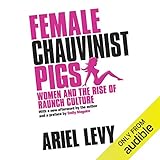
- Audible Audiobook
- Ariel Levy (Author) - Aimee Jolson (Narrator)
- English (Publication Language)
- 01/03/2013 (Publication Date) - Audible Studios (Publisher)
3. Assess media influence critique: A significant portion of the book dissects how media industries promote and profit from these “female chauvinist” performances.
- Action: Pay attention to Levy’s analysis of the economic and cultural incentives driving these trends.
- Look for: Discussions on how media shapes audience perceptions and female self-perception.
- Mistake to avoid: Separating the cultural phenomenon from the industries that amplify it; Levy links them directly.
4. Consider the “why”: Levy explores the underlying psychological and societal reasons for women adopting these personas, including internalized misogyny, rebellion, or negotiation of power.
- Action: Analyze Levy’s exploration of the motivations behind female chauvinist behavior.
- Look for: Sections discussing societal pressures, power dynamics, and individual agency.
- Mistake to avoid: Attributing a single, simplistic cause to the behavior; Levy presents multiple contributing factors.
5. Evaluate limitations and relevance: As a 2005 publication, some examples may feel dated, but the core themes often remain relevant.
- Action: Reflect on how the issues Levy raises manifest in contemporary culture.
- Look for: Enduring patterns of sexualization and media representation.
- Mistake to avoid: Discarding the book’s insights solely because its specific examples are from over a decade ago.
Failure Mode: Over-Simplification of Agency
A common failure mode readers hit with Female Chauvinist Pigs by Ariel Levy is the tendency to over-simplify the concept of agency within the cultural dynamics Levy describes. Readers might interpret Levy’s critique as suggesting women have no genuine choice, or conversely, that any adoption of hyper-sexualized personas is purely a conscious, empowered choice.
- Detection: This failure mode is detectable when a reader feels the book presents a binary: either women are duped by media, or they are fully in control and making empowered choices. Look for moments where the nuance of internalized pressures, societal expectations, and complex negotiations of power are glossed over in favor of a singular interpretation of intent. If the reader finds themselves labeling women within the book’s examples as either victims or fully empowered agents without acknowledging the messy middle ground, this failure mode is likely present.
- Correction: To avoid this, focus on Levy’s exploration of internalized misogyny and the complex interplay between societal structures and individual actions. Recognize that “agency” within the context Levy describes is often constrained and operates within a system that has already shaped preferences and possibilities. Levy herself navigates this complexity, suggesting that seemingly empowered choices can still be products of patriarchal conditioning. The goal is to see the performance of “female chauvinism” not as a simple act of free will or pure victimhood, but as a complex response to a specific cultural environment.
BLOCKQUOTE_0
Female Chauvinist Pigs by Ariel Levy: Key Themes and Counterarguments
Ariel Levy’s Female Chauvinist Pigs delves into the paradoxical phenomenon of women adopting and performing hyper-sexualized, often demeaning, personas. Levy argues that this trend, prevalent in media and popular culture, represents a form of “female chauvinism”—not a claim to superiority, but an embrace of traditionally masculine, objectifying behaviors. The book’s strength lies in its unflinching examination of how cultural narratives and media industries shape female identity and performance.
Levy meticulously dissects examples ranging from the glossy pages of men’s magazines to the constructed realities of reality television. She contends that women participating in these trends may be reacting to, or even perpetuating, a culture that commodifies female sexuality. This creates a complex dynamic where reclaiming power can, paradoxically, involve adopting the very tools of objectification.
However, a contrarian perspective raises questions about the extent to which these performances are entirely devoid of genuine agency or subversive intent. While Levy focuses on the potentially damaging aspects of internalizing patriarchal norms, critics might argue that some women utilize hyper-sexualization as a form of strategic empowerment, a calculated manipulation of dominant cultural codes to gain attention, influence, or economic advantage. This viewpoint suggests that agency can exist even within restrictive systems, and that the performance, while potentially problematic, can also be a site of resistance or negotiation.
Table: Analyzing Perceptions of Female Chauvinism
| Aspect | Levy’s Primary Argument | Contrarian Counterpoint | Evidence/Example |
|---|---|---|---|
| Agency | Primarily constrained by patriarchal norms and media influence. | Can be exercised strategically within restrictive systems. | Women using sexualized imagery for career advancement in industries like modeling. |
| Motivation | Internalized misogyny, societal pressure, performance. | Strategic choice, rebellion, economic opportunism. | A celebrity adopting a provocative persona to secure lucrative endorsement deals. |
| Empowerment | Often illusory; a performance of male-defined sexuality. | Can be a tool for gaining visibility and influence. | Female politicians or executives using carefully curated sexuality in public life. |
Expert Tips
- Recognize the performance: Levy’s analysis hinges on distinguishing between genuine self-expression and a culturally constructed performance of sexuality.
- Actionable Step: When encountering media featuring hyper-sexualized women, ask yourself: “Is this a genuine expression of self, or a performance designed to meet external expectations or market demands?”
- Common Mistake to Avoid: Immediately labeling such performances as either purely empowering or purely victimizing. Levy’s work suggests a more complex, often contradictory, reality.
- Interrogate media narratives: The book highlights how media industries actively create and promote these “female chauvinist” archetypes for profit.
- Actionable Step: Critically analyze the framing and context of sexualized content in magazines, films, and online platforms. Consider who benefits from this portrayal.
- Common Mistake to Avoid: Consuming media passively without questioning the underlying messages about gender and sexuality being conveyed.
- Distinguish from genuine feminism: Levy is clear that “female chauvinism” is not a feminist ideal but a critique of certain cultural trends.
- Actionable Step: Differentiate between women embracing hyper-sexualization and feminist principles that often advocate for liberation from sexual objectification.
- Common Mistake to Avoid: Equating the adoption of provocative personas with feminist activism or empowerment.
Common Myths
- Myth 1: “Female Chauvinist Pigs” advocates for women to abandon all forms of sexuality and self-expression.
- Why it matters: This misinterprets Levy’s critique as a puritanical stance, rather than an analysis of specific cultural trends.
- Fix: Understand that Levy is dissecting the performance of hyper-sexualization and its cultural implications, not condemning all expressions of female sexuality. Her focus is on the why and how of these performances within a patriarchal framework.
- Myth 2: The book argues that women who engage in these behaviors are unintelligent or easily manipulated.
- Why it matters: This oversimplifies Levy’s nuanced examination of societal pressures and internalized norms, potentially leading to victim-blaming.
- Fix: Recognize that Levy explores the complex psychological and sociological factors driving these behaviors, suggesting that individuals operate within powerful cultural forces, not necessarily a lack of
Decision Rules
- If reliability is your top priority for Female Chauvinist Pigs by Ariel Levy, choose the option with the strongest long-term track record and support.
- If value matters most, compare total ownership cost instead of headline price alone.
- If your use case is specific, prioritize fit-for-purpose features over generic ‘best overall’ claims.