An Introduction to ‘The Poetic Edda
This guide provides a precise overview of ‘The Poetic Edda,’ focusing on its structure, key themes, and enduring relevance. It is designed to equip readers with a foundational understanding before engaging with this foundational work of Norse mythology, emphasizing critical engagement and contextual awareness.
Quick Answer
- ‘The Poetic Edda’ is a compilation of Old Norse poems, primarily preserved in the medieval Icelandic manuscript known as the Codex Regius.
- It serves as a critical primary source for understanding pre-Christian Norse beliefs, cosmology, and heroic legends.
- Readers should approach this text with an understanding of its poetic nature and mythological context, rather than as a literal historical account.
Who This Is For
- Individuals interested in Norse mythology, Viking history, and Germanic folklore seeking primary source material.
- Students and enthusiasts of ancient literature and comparative mythology who require direct engagement with foundational texts.
To truly appreciate the nuances of ‘The Poetic Edda,’ selecting a scholarly translation is paramount. Many editions offer valuable insights and annotations.
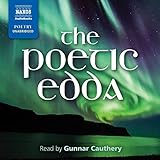
- Audible Audiobook
- Anonymous (Author) - Gunnar Cauthery (Narrator)
- English (Publication Language)
- 01/08/2022 (Publication Date) - Naxos AudioBooks (Publisher)
What to Check First
- Manuscript Context: Recognize that ‘The Poetic Edda’ is a collection assembled from poems originating from various periods, preserved in a single, later manuscript (Codex Regius, circa 1270 AD).
- Poetic Structure: Understand that these are poems, often employing kennings (metaphorical compound phrases) and alliteration, which necessitate careful reading and potential annotation.
- Mythological Framework: Familiarize yourself with the basic Norse pantheon (Odin, Thor, Freyja) and the concept of Ragnarök to better comprehend the narrative arcs and character motivations.
- Translation Fidelity: Be aware that the translation chosen can significantly influence the reading experience due to differing interpretive choices and scholarly approaches.
Step-by-Step Plan: Engaging with The Poetic Edda
1. Select a Scholarly Translation:
- Action: Choose a translation recognized for its academic accuracy and clarity.
- What to Look For: Editions that include extensive footnotes, glossaries, and introductory essays by specialists in Norse studies. Carolyne Larrington’s translation, for instance, is often recommended for its balance of academic rigor and reader accessibility.
- Mistake: Selecting a translation based solely on availability or cost without verifying its scholarly reputation, which can lead to misinterpretations of the text.
2. Prioritize Mythological Poems:
- Action: Begin with poems such as “Vafþrúðnir’s Lay” or “Grímnir’s Say” to establish a foundational understanding of Norse cosmology and theology.
- What to Look For: Information regarding the creation of the world, the domains of the gods, and the cyclical nature of existence as presented in Norse belief.
- Mistake: Directly engaging with the heroic lays without first grasping the mythological framework, which can obscure the context and motivations of the characters.
3. Analyze the Codex’s Thematic Grouping:
- Action: Understand that the poems are organized thematically, not necessarily chronologically or strictly narratively.
- What to Look For: The clear distinction between the mythological poems (dealing with gods) and the heroic poems (focusing on legendary figures like Sigurd).
- Mistake: Assuming a continuous, linear narrative flow across the entire collection, which can cause confusion regarding character reappearances and plot developments.
4. Document Unfamiliar Terminology:
- Action: Utilize a notebook or digital annotation tools to record kennings, names, and concepts that are not immediately clear.
- What to Look For: Recurring kennings (e.g., “wave-steed” for ship) and mythological figures that appear across multiple poems, indicating interconnectedness.
- Mistake: Overlooking or skipping passages containing unfamiliar terms, leading to a fragmented comprehension of the overall text.
5. Appreciate Poetic Devices:
- Action: Pay close attention to the use of alliteration, internal rhyme, and the specific stanzaic structure employed in the verses.
- What to Look For: How the rhythm, sound, and meter contribute to the mood, emphasis, and overall impact of the poetry.
- Mistake: Reading the poems solely for their plot elements, thereby neglecting the integral role of their artistry and sonic qualities.
6. Consult Scholarly Analysis (Recommended):
- Action: After reading a section or poem, refer to scholarly articles or books that offer analysis of specific themes or literary techniques.
- What to Look For: Diverse interpretations and historical context that may not be immediately evident from a direct reading of the text.
- Mistake: Relying exclusively on secondary sources without first forming an independent interpretation of the text, which can limit personal discovery and critical engagement.
Common Myths About The Poetic Edda
- Myth: ‘The Poetic Edda’ functions as a unified religious text, analogous to the Bible.
- Why it Matters: This perception can lead to the expectation of a consistent theological doctrine or moral code, which is not present. The poems reflect a diversity of traditions and likely served varied functions, including entertainment and ritual recitation.
- Fix: Approach ‘The Poetic Edda’ as a collection of ancient poetry that reflects a complex and evolving belief system, rather than a dogmatic scripture.
- Myth: The heroic lays within ‘The Poetic Edda’ are factual historical accounts of Viking Age events.
- Why it Matters: While these poems may draw upon legendary figures and potentially contain historical kernels, they are significantly embellished with supernatural elements and mythological parallels. Treating them as literal history distorts both our understanding of the past and the nature of the literature itself.
- Fix: Read the heroic lays as sagas and epic poetry, recognizing that historical figures and events are interwoven with myth, legend, and literary conventions.
- Myth: ‘The Poetic Edda’ contains all known Old Norse poetry.
- Why it Matters: This is inaccurate. While a significant collection, ‘The Poetic Edda’ represents only a portion of the extant Old Norse poetic corpus. Numerous other poems and sagas exist, offering different perspectives and narratives.
- Fix: Understand ‘The Poetic Edda’ as a vital primary source, but acknowledge that it is not exhaustive of all Old Norse literary output.
The Poetic Edda by Unknown: Core Themes and Insights
This collection, attributed to an unknown author or authors, provides a crucial window into the worldview of medieval Scandinavians. The poems are broadly categorized into two main groups: those that address the gods and mythological events, and those that recount the deeds of legendary heroes.
Mythological Poems
These poems, including “Völuspá” (The Seeress’s Prophecy) and “Hávamál” (Sayings of the High One), explore the creation of the cosmos, the interactions and conflicts among the Æsir and Vanir gods, and the eschatological event of Ragnarök. “Völuspá” is particularly notable for its sweeping narrative, tracing the world from its genesis to its fiery end and subsequent rebirth. “Hávamál” presents wisdom and practical advice attributed to Odin, covering a range of topics from social conduct to the importance of knowledge.
Heroic Poems
The heroic lays, such as the poems concerning Sigurd (e.g., “Fáfnir’s Bane,” “The Death of Sigurd”), draw from rich Germanic legendary traditions. These narratives frequently explore themes of fate, honor, betrayal, and the tragic repercussions of ambition and destiny. While distinct from the god-centric myths, these heroic tales are often interwoven with them, illustrating how the divine realm influenced mortal affairs and vice versa.
BLOCKQUOTE_0
Expert Caution: Reading The Poetic Edda by Unknown
Engaging with “The Poetic Edda by Unknown” necessitates a nuanced approach. It is critical to remember that these are poetic compositions, not historical records or systematic theological treatises. The worldview presented is one where fate (wyrd) is a powerful, often inescapable force, and where gods are not omnipotent but subject to cosmic cycles and even their own mortality. The inherent ambiguity and symbolic language are strengths, inviting interpretation rather than dictating a singular meaning.
Decision Rules
- If textual accuracy and scholarly consensus are your primary concerns for ‘The Poetic Edda by Unknown,’ prioritize editions with extensive critical apparatus and reputable academic endorsements.
- If ease of access and initial comprehension are paramount, select a translation known for its readability, but be prepared to cross-reference with scholarly notes for deeper understanding.
- If your objective is to trace the influence of Norse mythology, focus on poems that directly inform later literary traditions, such as those involving Odin or the Ragnarök cycle.
FAQ
- Q: Is ‘The Poetic Edda’ a single, unified text authored by one individual?
- A: No, ‘The Poetic Edda’ is a compilation of Old Norse poems collected in the Codex Regius manuscript. The individual poems likely originated from different times and authors, with most authorship remaining unknown.
- Q: What distinguishes the mythological poems from the heroic poems within the Edda?
- A: Mythological poems focus on the gods, the creation of the world, and cosmic events like Ragnarök. Heroic poems, conversely, center on the exploits and tragedies of legendary human figures.
- Q: How should one interpret the prevalent themes of violence and fatalism in ‘The Poetic Edda’?
- A: These themes should be understood within the cultural and historical context of the time, reflecting beliefs about honor, destiny, and the harsh realities of life. They represent literary and mythological explorations, not moral endorsements.
- Q: What is a ‘kenning,’ and why is it important for understanding the poems?
- A: A kenning is a metaphorical compound expression used in Old Norse poetry, such as “whale-road” for the sea. Recognizing and understanding these poetic devices is essential for deciphering the imagery and intended meaning of the verses.
The Poetic Edda by Unknown: A Reader’s Table
| Aspect | Description | Key Takeaway for Reader |
|---|---|---|
| <strong>Genre</strong> | A collection of Old Norse poems encompassing mythological and heroic lays. | Approach as poetry and mythology, not as literal history or scripture. |
| <strong>Primary Themes</strong> | Creation, cosmology, divine narratives, fate, heroism, eschatology (Ragnarök), wisdom, and social conduct. | Offers insight into a complex worldview where fate and divine powers are central, often in conflict. |
| <strong>Narrative Style</strong> | Characterized by alliterative verse, kennings, direct address, and prophetic pronouncements. Lacks consistent plot progression across all poems. | Requires active engagement with poetic language and awareness of thematic grouping rather than linear storytelling. |
| <strong>Historical Value</strong> | Provides invaluable primary source material for understanding pre-Christian Norse beliefs, mythology, and legendary traditions. | Offers a unique glimpse into the cultural and spiritual landscape of medieval Scandinavia. |
| <strong>Enduring Relevance</strong> | Influences modern fantasy literature, forms a foundation for understanding Scandinavian heritage, and offers timeless meditations on fate, courage, and human behavior. | Continues to resonate through its exploration of fundamental human experiences and its rich, evocative imagery. |