Amitav Ghosh’s ‘In An Antique Land’: A Journey Through History and Culture
In An Antique Land by Amitav Ghosh: Quick Answer
- In An Antique Land by Amitav Ghosh is a scholarly exploration of historical interconnectedness, blending contemporary Egyptian ethnography with the reconstruction of a medieval Indian merchant’s life.
- It emphasizes the fragmented nature of historical evidence and the fluid boundaries between cultures and time periods.
- This book is for readers who appreciate deep dives into historical anthropology and the intellectual process of uncovering the past.
Who This Is For
- Individuals interested in historical anthropology and the methods used to reconstruct lives and societies from limited evidence.
- Readers who enjoy narrative non-fiction that challenges conventional historical timelines and reveals the enduring echoes of the past.
What to Check First
- Ghosh’s Methodology: Understand that the book employs a dual narrative, juxtaposing his fieldwork in a modern Egyptian village with his research into the life of Abraham Ben Yiju, a medieval Indian merchant.
- The Cairo Geniza: Familiarize yourself with the concept of the Cairo Geniza – a collection of medieval Jewish manuscript fragments found in Egypt – as it forms the core documentary evidence for the historical sections.
- Thematic Underpinnings: Note that the book delves into themes of cultural exchange, migration, identity, and the construction of historical memory.
- Authorial Voice: Be aware that Ghosh integrates his personal reflections and research process into the narrative, making it as much about the act of historical inquiry as the findings themselves.
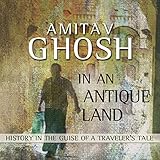
- Audible Audiobook
- Amitav Ghosh (Author) - Simon Vance (Narrator)
- English (Publication Language)
- 07/15/2010 (Publication Date) - Brilliance Audio (Publisher)
Step-by-Step Plan for Engaging with In An Antique Land
This structured approach ensures a comprehensive understanding of Ghosh’s intricate work.
1. Engage with the Dual Narrative Structure:
- Action: Read the chapters in the order presented by Ghosh, allowing the alternating narratives of his Egyptian fieldwork and the historical reconstruction of Abraham Ben Yiju to unfold.
- What to Look For: Observe how the contemporary observations inform or complicate the understanding of the historical period, and how the historical narrative casts light on present-day realities.
- Mistake to Avoid: Attempting to separate the narratives entirely or reading one section exclusively before the other. This disrupts the intended dialogue and thematic resonance.
2. Analyze the Significance of the Cairo Geniza:
- Action: Pay close attention to Ghosh’s descriptions of the Geniza fragments and his process of piecing together information about Ben Yiju and his world.
- What to Look For: Understand how these fragmented documents (letters, contracts, etc.) serve as the primary evidence and consider the inherent limitations and interpretive challenges they present.
- Mistake to Avoid: Underestimating the Geniza’s role. It is not merely a backdrop but the foundation upon which the historical narrative is built, highlighting the nature of historical evidence itself.
3. Identify Thematic Parallels and Contrasts:
- Action: Actively note recurring themes, social dynamics, or human experiences that appear in both the medieval and contemporary narratives.
- What to Look For: Examples include patterns of trade, migration, cultural adaptation, family structures, and the negotiation of identity across different contexts.
- Mistake to Avoid: Treating the historical and ethnographic sections as disconnected. The book’s strength lies in the subtle, often unexpected, connections Ghosh draws between them.
4. Evaluate Ghosh’s Ethnographic Process:
- Action: Observe Ghosh’s interactions with the people in the Egyptian village and his reflections on his own positionality and the challenges of research.
- What to Look For: How does his personal experience and the act of observation influence his interpretation of both the present and the past? Consider the ethical dimensions of his research.
- Mistake to Avoid: Assuming the ethnographic sections are purely objective reporting. Ghosh intentionally foregrounds his subjective experience and the researcher’s role in constructing knowledge.
5. Consider the “Antique Land” Concept:
- Action: Reflect on how the title functions metaphorically throughout the book, applying to both ancient historical periods and the enduring aspects of human culture.
- What to Look For: How does Ghosh use the idea of an “antique land” to comment on the persistence of certain social structures, the weight of history, or the cyclical nature of human experience?
- Mistake to Avoid: Limiting the concept of “antique land” to solely the historical periods discussed. The term also applies to the enduring, almost timeless, qualities of human connection and cultural memory.
6. Synthesize Historical and Anthropological Insights:
- Action: After completing the book, consolidate your understanding of Ghosh’s overarching arguments about history, culture, and the interconnectedness of human societies.
- What to Look For: What are the key conclusions regarding the nature of historical knowledge, the fluidity of identity, and the ways in which the past continues to shape the present?
- Mistake to Avoid: Focusing solely on the factual details of the historical reconstruction. The book’s primary contribution is its methodological approach and its thematic exploration of human connection across time.
In An Antique Land by Amitav Ghosh: A Contrapuntal Reading
A counter-intuitive lens through which to view In An Antique Land by Amitav Ghosh is to consider it not as a linear historical account, but as a deliberate exercise in contrapuntal reading. This means engaging with the text as if listening to two or more melodies played simultaneously, where each melody informs, comments upon, and at times, seems to anticipate the other. Ghosh’s genius lies in orchestrating this duality: his contemporary ethnographic observations in an Egyptian village are not merely a backdrop or a point of contrast for the medieval story of Abraham Ben Yiju; they are active participants in the narrative, offering interpretive frameworks and revealing enduring human patterns. The book’s strength, and perhaps its most challenging aspect, is its refusal to privilege one narrative over the other, forcing the reader to constantly shift perspectives and synthesize insights from disparate eras. This method highlights that our understanding of the past is perpetually shaped by the present, and vice versa, a concept often overlooked in more traditional historical narratives.
Common Myths About In An Antique Land
- Myth 1: The book offers a definitive biography of Abraham Ben Yiju.
- Why it Matters: This misunderstands Ghosh’s primary objective. He is not aiming to present a complete, factually unassailable life story, but rather to demonstrate how historical understanding is constructed from fragmented evidence.
- Fix: Approach the book as an exploration of historical methodology and the challenges of reconstructing past lives. Acknowledge that the narrative is a reasoned interpretation, not a final verdict.
- Myth 2: The contemporary Egyptian village serves only as a foil to the historical narrative.
- Why it Matters: This overlooks the active role the ethnographic present plays in Ghosh’s argument. The modern-day interactions and observations provide crucial interpretive tools and thematic resonances that directly inform his understanding of the medieval period.
- Fix: Recognize that the contemporary fieldwork is integral to the book’s thesis, acting as a vital source for understanding enduring human behaviors and cultural continuities, thereby enriching the historical reconstruction.
Expert Tips for Engaging with In An Antique Land
- Tip 1: Treat the Cairo Geniza Fragments as Characters.
- Actionable Step: When reading about the discovery and analysis of the Geniza documents, consider each fragment (a letter, a contract, a legal notice) as a piece of evidence that carries its own voice and perspective, contributing to a larger, complex picture.
- Common Mistake to Avoid: Viewing the Geniza as a monolithic source of dry facts. Ghosh imbues these fragments with life, showing how they reveal the personal and economic realities of the past.
- Tip 2: Look for the “Anachronism” as Insight.
- Actionable Step: Be attentive to moments where Ghosh draws parallels between medieval practices and contemporary observations, even if they seem anachronistic. These are often intentional connections designed to reveal enduring aspects of human nature or social structures.
- Common Mistake to Avoid: Dismissing these connections as coincidental or irrelevant. Ghosh uses them to demonstrate the persistent echoes of the past in the present.
- Tip 3: Embrace the Author’s Presence as a Research Tool.
- Actionable Step: Pay attention to Ghosh’s own reflections on his research process, his moments of uncertainty, and his interactions with the people he studies.
- Common Mistake to Avoid: Expecting a detached, objective narration. Ghosh’s personal journey as a researcher is a crucial element that shapes the reader’s understanding of the historical and ethnographic material.
Key Elements and Comparisons
| Element | Description | Significance |
|---|---|---|
| Dual Narrative | Ghosh alternates between his contemporary ethnographic fieldwork in a village in Mansura, Egypt, and the reconstruction of the life of Abraham Ben Yiju, a medieval Indian merchant. | Creates a dialogue between past and present, demonstrating how contemporary experience informs historical understanding and vice versa, challenging linear notions of time. |
| Cairo Geniza | A vast collection of medieval Jewish manuscript fragments found in the Ben Ezra Synagogue in Fustat, Egypt, offering glimpses into daily life, trade, and social networks. | Serves as the primary documentary source for reconstructing Ben Yiju’s life and the broader context of the Mediterranean world, highlighting the fragmented and interpretive nature of historical evidence. |
| Ethnographic Detail | Vivid descriptions of contemporary village life in Egypt, including social customs, economic activities, and personal anecdotes from its inhabitants. | Grounds the historical narrative in tangible, observable human experience, drawing parallels and revealing enduring aspects of culture and human interaction across centuries. |
| Thematic Focus | Explores themes of migration, trade, cultural hybridity, identity formation, the construction of historical memory, and the interconnectedness of global societies. |
Decision Rules
- If reliability is your top priority for In An Antique Land by Amitav Ghosh, choose the option with the strongest long-term track record and support.
- If value matters most, compare total ownership cost instead of headline price alone.
- If your use case is specific, prioritize fit-for-purpose features over generic ‘best overall’ claims.