Adventures Of Penrod By Booth Tarkington
Booth Tarkington’s Penrod series, specifically the first book Penrod: His Book (1914), offers a nostalgic yet often sharp-eyed portrayal of childhood in the American Midwest at the turn of the 20th century. It follows the misadventures of Penrod Schofield, a ten-year-old boy whose imaginative world and attempts to navigate societal expectations frequently lead to humorous and sometimes chaotic outcomes. While celebrated for its realistic depiction of boyhood and its contribution to regional American literature, readers approaching Penrod today might find its social context and narrative pacing require a discerning eye. This guide aims to provide a clear understanding of the work’s strengths, potential limitations, and how to best engage with its unique literary world.
Who This Is For
- Readers interested in early 20th-century American regional literature: Penrod offers an authentic snapshot of life, language, and social dynamics in the Midwest during a period of significant cultural transition. It provides a window into a specific time and place, distinct from more universal coming-of-age narratives.
- Those who appreciate character-driven humor and observational detail: The long-term relevance of Penrod lies in Tarkington’s keen observation of children’s psychology and his ability to translate everyday boyhood experiences into comedic scenarios. Readers who enjoy subtle wit and character quirks will find much to appreciate.
What To Check First
Before diving into Penrod, consider these points to calibrate your reading experience:
- Historical Context: Recognize that the novel was written in 1914. Social norms, language, and attitudes towards children, gender roles, and race will reflect that era. Be prepared to read critically, understanding that not all portrayals align with contemporary values. For example, the casual use of certain terms or the depiction of societal structures might feel jarring.
- Narrative Style: Tarkington employs a descriptive and often leisurely narrative style. The plot is less about a driving sequence of events and more about episodic explorations of Penrod’s world and psyche. Readers accustomed to faster-paced modern fiction may need to adjust their expectations.
- Underlying Themes: Beyond the surface-level humor, Penrod explores themes of imagination versus reality, the child’s struggle for independence within a structured society, and the universal awkwardness of growing up. Understanding these deeper currents enriches the reading experience.
- Comparison to Similar Works: Penrod shares thematic ground with other works exploring childhood, such as Mark Twain’s The Adventures of Tom Sawyer or Booth Tarkington’s own later work, The Magnificent Ambersons. However, Penrod is distinctly focused on the internal world and immediate social circle of a single child, offering a more intimate, less epic scope than Twain’s adventures.
Understanding Penrod by Booth Tarkington: A Detailed Approach
Booth Tarkington’s Penrod series, particularly the foundational Penrod: His Book, stands as a significant work of American regional literature. It captures a specific slice of life in the early 20th century, focusing on the imaginative escapades and social navigation of its young protagonist. Engaging with Penrod requires an appreciation for its historical milieu and Tarkington’s particular brand of observational humor.
The World of Penrod Schofield
Penrod: His Book introduces readers to ten-year-old Penrod Schofield, a boy living in a suburban Midwestern town. Penrod’s defining characteristic is his vivid imagination, which he uses to transform mundane reality into grand adventures. He is often accompanied by his loyal but less imaginative companions, particularly Sam Williams and Georgie Bassett. Their escapades, fueled by Penrod’s schemes, range from attempting to form a dramatic society to navigating the complexities of childhood friendships and family expectations.
For those looking to immerse themselves in this classic of American literature, the book itself is readily available. It’s a wonderful way to experience Tarkington’s unique voice and the world of Penrod Schofield firsthand.
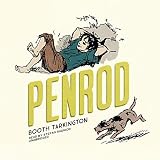
- Audible Audiobook
- Booth Tarkington (Author) - Stefan Rudnicki (Narrator)
- English (Publication Language)
- 10/20/2020 (Publication Date) - Blackstone Publishing (Publisher)
Action: Observe Penrod’s internal monologue and his translation of everyday events into dramatic scenarios.
What to look for: Note how Penrod reinterprets parental instructions, schoolyard interactions, or neighborhood events through the lens of his imaginative games. For instance, a simple trip to the store might become a perilous quest in his mind.
Mistake: Dismissing these imaginative flights as mere childish fantasy without recognizing them as the core of Penrod’s character and the source of the book’s humor and thematic depth.
Tarkington’s Narrative Voice and Style
Booth Tarkington’s prose is characterized by its descriptive richness and a subtly ironic, omniscient narrator. He possesses a remarkable ability to capture the nuances of childhood dialogue and the distinct social strata of his setting. The pacing is deliberate, allowing for detailed character studies and the gradual unfolding of humorous situations.
Action: Pay attention to the narrator’s commentary on Penrod’s actions and motivations.
What to look for: Identify moments where the narrator’s voice subtly underscores the gap between Penrod’s intentions and the actual outcomes, or highlights the social conventions Penrod struggles to comprehend. For example, the narrator might describe Penrod’s grand pronouncements with a gentle, knowing amusement.
Mistake: Expecting a fast-paced, plot-driven narrative. Tarkington prioritizes atmosphere and character over rapid plot progression, which can lead to reader disengagement if expectations are misaligned.
Thematic Resonance: Imagination vs. Reality
A central theme in Penrod is the friction between a child’s boundless imagination and the often-unyielding realities of the adult world and social order. Penrod’s schemes frequently founder not due to a lack of ingenuity, but because they collide with practical limitations or the expectations of those around him.
Action: Analyze the consequences of Penrod’s imaginative ventures.
What to look for: Examine specific instances where Penrod’s elaborate plans, such as his attempts at theatrical productions or his interpretations of social etiquette, lead to unexpected or embarrassing results. Consider the scene where Penrod attempts to “reform” his pet dog, Duke, through his own brand of discipline.
Mistake: Focusing solely on the humorous outcomes without considering the underlying commentary on the challenges of childhood development and the process of learning to navigate societal rules.
Social Commentary and Historical Snapshot
Penrod provides an invaluable, albeit selective, glimpse into American life in the early 20th century. Tarkington captures the routines, the social customs, and the prevailing attitudes of the time. This includes depictions of family life, school environments, and the broader community.
Action: Note the social dynamics and cultural references within the narrative.
What to look for: Observe the interactions between children and adults, the expectations placed upon boys and girls, and the general atmosphere of a Midwestern town before the widespread influence of modern technology and media. Consider the way neighborhood hierarchies are depicted or how community events are portrayed.
Mistake: Interpreting the novel as a universal depiction of childhood rather than a specific cultural artifact. The social attitudes and language, while authentic to the period, may not resonate with or be acceptable to contemporary readers without critical engagement.
Failure Mode: Misinterpreting Historical Context
A common pitfall for readers encountering Penrod by Booth Tarkington is a failure to adequately account for its historical context, leading to misinterpretations of character motivations, social norms, and thematic intent. This can manifest as anachronistic judgment of characters or a misunderstanding of the author’s satirical aims.
Detection: Readers may find themselves consistently surprised or offended by elements that, while potentially problematic by today’s standards, were commonplace or less scrutinized during the period of publication. This could include casual racial references, gender stereotypes, or a lack of overt moral condemnation for certain behaviors that would be unacceptable now. For example, if a reader consistently reacts with shock to the portrayal of mild parental discipline or the limited roles assigned to female characters without acknowledging the era, they are likely experiencing this failure mode.
Correction: Before or early in the reading process, familiarize yourself with the social and cultural landscape of the United States around 1910-1920. Understanding the prevailing norms regarding childhood, family structure, education, and societal expectations can provide a necessary framework. Recognizing that Tarkington is often depicting these elements with a degree of affectionate satire, rather than necessarily endorsing them, is also crucial. The goal is not to excuse problematic content but to understand its place within the narrative and historical moment.
Common Myths About Penrod by Booth Tarkington
- Myth 1: Penrod is simply a collection of lighthearted children’s stories without deeper meaning.
- Correction: While undoubtedly humorous, Penrod offers a nuanced exploration of childhood psychology, the tension between imagination and reality, and the challenges of social acculturation. Tarkington uses Penrod’s escapades to comment on the universal experience of growing up and the often-absurd nature of societal expectations. The “meaning” lies in the keen observation of human nature, particularly the developing mind.
- Myth 2: The book’s portrayal of childhood is universally applicable to all children across time.
- Correction: Penrod is a product of its specific time and place – the American Midwest in the early 20th century. While the core emotions of childhood—curiosity, frustration, joy—are timeless, the social context, language, and specific challenges faced by Penrod are historically situated. For instance, the educational system, family structures, and available leisure activities depicted are distinct to that era.
Expert Tips for Engaging with Penrod
- Tip 1: Embrace the Episodic Structure.
- Action: Read each chapter or short section as a self-contained vignette.
- Common Mistake to Avoid: Trying to force a strong overarching plot where one doesn’t exist. The strength of Penrod lies in its collection of character moments and humorous situations, not a linear, escalating narrative.
- Tip 2: Read Aloud or Imagine the Voice.
- Action: If reading alone, try reading certain passages aloud, or mentally cast actors for the characters.
- Common Mistake to Avoid: Underestimating the importance of Tarkington’s narrative voice. The subtle irony and descriptive flair are best appreciated when the reader actively engages with the author’s style, which often carries the humor.
- **Tip 3: Contextualize, Don’t Just Judge
Quick Comparison
| Option | Best for | Pros | Watch out |
|---|---|---|---|
| Who This Is For | General use | Readers interested in early 20th-century American regional literature: *Penro… | Common Mistake to Avoid: Trying to force a strong overarching plot where one… |
| What To Check First | General use | Those who appreciate character-driven humor and observational detail: The end… | Common Mistake to Avoid: Underestimating the importance of Tarkington’s narra… |
| Understanding Penrod by Booth Tarkington A Detailed Approach | General use | Historical Context: Recognize that the novel was written in 1914. Social norm… | Common Mistake to Avoid: Trying to force a strong overarching plot where one… |
| Failure Mode Misinterpreting Historical Context | General use | Narrative Style: Tarkington employs a descriptive and often leisurely narrati… | Common Mistake to Avoid: Underestimating the importance of Tarkington’s narra… |
Decision Rules
- If reliability is your top priority for Penrod by Booth Tarkington, choose the option with the strongest long-term track record and support.
- If value matters most, compare total ownership cost instead of headline price alone.
- If your use case is specific, prioritize fit-for-purpose features over generic ‘best overall’ claims.