Adrian Tchaikovsky’s Children Of Memory: A Sci-Fi Epic Continues
Children Of Memory by Adrian Tchaikovsky: Quick Answer
- Children Of Memory by Adrian Tchaikovsky is the third installment in the Children of Time series, continuing its exploration of evolutionary biology, artificial intelligence, and the long-term consequences of civilization.
- Readers seeking complex world-building, intricate biological concepts, and a patient, character-driven narrative will find this installment rewarding, though it demands significant investment.
- This book is best suited for established fans of the series or readers who appreciate deeply researched, philosophical science fiction, rather than those seeking fast-paced action.
Who This Is For
- Established fans of Adrian Tchaikovsky’s Children of Time and Children of Ruin who are invested in the ongoing saga of humanity and its evolving descendants.
- Readers who enjoy science fiction that delves into speculative biology, the nature of consciousness, and the challenges of interspecies communication, presented with meticulous detail.
What to Check First
- Series Context: Ensure you have read Children of Time and Children of Ruin. Children of Memory builds directly upon their events and character arcs, making prior knowledge essential for comprehension and enjoyment.
- Pacing Expectations: Tchaikovsky’s novels, including this one, are known for their deliberate pacing. The narrative unfolds slowly, focusing on gradual development and detailed exposition rather than rapid plot progression.
- Thematic Resonance: Consider if you are in the mood for a story that grapples with profound philosophical questions about existence, memory, and societal collapse. This installment is thematically dense.
- Biological Focus: Be prepared for extensive exploration of biological concepts. Tchaikovsky’s signature is his detailed, plausible extrapolation of evolutionary processes and alien ecologies.
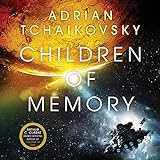
- Audible Audiobook
- Adrian Tchaikovsky (Author) - Mel Hudson (Narrator)
- English (Publication Language)
- 01/31/2023 (Publication Date) - Orbit (Publisher)
Step-by-Step Plan for Approaching Children Of Memory
1. Re-familiarize Yourself with Series Lore: Before diving in, briefly review the key characters, plot points, and species from Children of Time and Children of Ruin.
- What to look for: Recall the state of humanity, the evolution of the Portiids (spider civilization), and the fate of the uplifted species.
- Mistake: Starting Children of Memory without a clear recollection of prior events can lead to confusion, as new plot threads are interwoven with established histories.
2. Understand the New Setting: Recognize that Children of Memory introduces a new primary setting and introduces new, central mysteries that drive the plot.
- What to look for: Pay attention to the descriptions of the new planet and its unique environmental challenges and inhabitants.
- Mistake: Expecting the story to remain solely focused on the familiar worlds of the previous books will overlook the significant shifts in scope.
3. Engage with the Biological Extrapolations: Actively follow Tchaikovsky’s detailed explanations of biological evolution and adaptation.
- What to look for: Note how environmental pressures shape the development of new life forms or influence existing ones.
- Mistake: Skipping over the biological explanations can diminish the appreciation for the scientific rigor and originality of Tchaikovsky’s world-building.
4. Track the Multiple Narrative Threads: Be prepared to follow several distinct storylines that will eventually converge.
- What to look for: Identify the primary protagonists and their individual journeys, noting how their paths might intersect.
- Mistake: Becoming impatient with the separation of plotlines can lead to frustration; the payoff comes from their eventual synthesis.
5. Consider the AI and Consciousness Themes: Pay close attention to the evolving roles and natures of artificial intelligence within the narrative.
- What to look for: Observe how AI entities interact with organic life and what their developing consciousness implies.
- Mistake: Underestimating the significance of AI characters or their philosophical implications can result in missing a core thematic element.
6. Embrace the Philosophical Depth: Allow yourself to ponder the larger questions about memory, identity, and the cyclical nature of civilizations.
- What to look for: Reflect on the characters’ decisions and the long-term consequences of their actions on a grand scale.
- Mistake: Treating the novel purely as a plot-driven adventure will bypass the rich philosophical underpinnings that define Tchaikovsky’s work.
7. Be Patient with Resolution: Understand that Tchaikovsky often concludes his novels with threads that suggest future possibilities rather than definitive endings.
- What to look for: Appreciate the sense of continuation and the open-ended nature of the finale.
- Mistake: Expecting every question to be definitively answered may lead to disappointment; the series is designed for ongoing exploration.
Children Of Memory by Adrian Tchaikovsky: Analysis and Comparison
Adrian Tchaikovsky’s Children of Memory continues the ambitious scope of its predecessors, presenting a narrative that is both a culmination and a new beginning. The novel’s strength lies in its unflinching commitment to exploring the vastness of time and the intricate, often brutal, mechanisms of evolution. Unlike many space operas that prioritize immediate conflict, Tchaikovsky dedicates significant page count to the slow burn of biological and societal change.
One counter-intuitive observation about Children of Memory is its inherent critique of narrative closure. While readers may expect a definitive conclusion to the saga established in the first two books, Tchaikovsky instead emphasizes the continuous, often messy, nature of existence. The “memories” in the title are not just personal recollections but the cumulative echoes of past civilizations and biological lineages, suggesting that true endings are rare and that the past perpetually informs the present and future. This can be frustrating for readers seeking neat resolutions, but it aligns with the novel’s deep exploration of evolutionary timescales and the persistence of life’s fundamental drives.
Comparison Framework
| Feature | Children of Time | Children of Ruin | Children of Memory |
|---|---|---|---|
| Primary Focus | Evolution of spiders, human diaspora | Inter-species conflict, AI consciousness | Interstellar exploration, memory, ancestral echoes |
| Narrative Pace | Deliberate, character-focused | More action-oriented, interspecies focus | Deliberate, philosophical, multi-threaded |
| Biological Depth | Foundational concepts, spider evolution | Expanded alien ecologies, uplifted species | Complex genetic memory, planetary adaptation |
| AI Presence | Present but less central | Significant, exploring sentience | Integral to plot and philosophical questions |
| Scope | Single planet, generational human struggle | Multiple star systems, galactic stakes | Interstellar, deep time, ancestral consciousness |
Best-Fit Picks by Use Case
- For the Dedicated Series Fan: If you’ve followed the Portiids and the remnants of humanity this far, Children of Memory is a necessary and rewarding continuation, offering significant thematic and narrative development.
- Concrete Takeaway: The novel deepens the understanding of the Portiid societal evolution and provides crucial context for their future trajectory.
- For the Hard Sci-Fi Aficionado: Readers who appreciate meticulously researched speculative biology and philosophical explorations of consciousness will find Children of Memory to be a rich, intellectually stimulating experience.
- Concrete Takeaway: The detailed extrapolation of how genetic memory might function and influence behavior offers a unique scientific premise.
- For the Pacing-Impatient Reader: If you prefer action-packed narratives with rapid plot progression, this installment may prove challenging. The story unfolds at a measured pace, prioritizing internal development and complex ideas over constant external conflict.
- Concrete Takeaway: The novel’s extended sequences detailing planetary ecosystems and character introspection might feel slow if immediate plot movement is prioritized.
Common Mistakes
- Skipping the Series: Jumping into Children of Memory without reading the preceding books.
- Why it matters: The narrative is deeply layered with established characters, species histories, and ongoing plotlines. Without prior knowledge, the story will be largely incomprehensible.
- Fix: Begin with Children of Time and proceed chronologically through Children of Ruin before starting Children of Memory.
- Underestimating the Biological Detail: Glancing over Tchaikovsky’s extensive explanations of evolutionary processes and alien biology.
- Why it matters: These details are not mere window dressing; they are fundamental to the plot, character motivations, and the unique nature of the alien species.
- Fix: Engage with the biological descriptions; they are key to understanding the world and its inhabitants.
- Expecting a Fast-Paced Thriller: Approaching the book with expectations of constant action and immediate gratification.
- Why it matters: Tchaikovsky’s style is deliberately paced, focusing on character development, philosophical inquiry, and the gradual unfolding of complex ideas.
- Fix: Adjust your reading expectations to appreciate the slow-burn narrative and the depth of its thematic explorations.
- Ignoring the AI Characters: Dismissing the artificial intelligence elements as secondary to the organic storylines.
- Why it matters: The AI characters and their evolving consciousness are central to the novel’s exploration of memory, identity, and the future of intelligent life.
- Fix: Give the AI characters and their arcs significant attention; they are integral to the novel’s core themes.
Decision Rules
- If reliability is your top priority for Children Of Memory by Adrian Tchaikovsky, choose the option with the strongest long-term track record and support.
- If value matters most, compare total ownership cost instead of headline price alone.
- If your use case is specific, prioritize fit-for-purpose features over generic ‘best overall’ claims.
FAQ
- Q: Do I need to have read the previous books to understand Children of Memory?
- A: Yes, it is highly recommended. Children of Memory directly continues the storylines and character arcs established in Children of Time and Children of Ruin. Understanding the prior events is crucial for grasping the plot, character motivations, and the overall context.
- Q: Is Children of Memory the final book in the series?
- A: While Children of Memory provides significant development and a sense of continuation, Adrian Tchaikovsky’s