A Look At Deadhouse Gates
Deadhouse Gates by Steven Erikson: Quick Answer
- Deadhouse Gates is the second novel in Steven Erikson’s Malazan Book of the Fallen series, continuing its complex narrative with a dual storyline focusing on war and survival.
- This installment is intended for readers who have already engaged with Gardens of the Moon and are prepared for a dense, thematically rich epic fantasy experience.
- It significantly expands the series’ scope by exploring the human cost of empire through the eyes of both soldiers and refugees, and introduces key characters vital to the overarching saga.
Who This Is For
- Readers committed to the Malazan Book of the Fallen series who have completed Gardens of the Moon and wish to follow its intricate, interconnected plot.
- Fans of epic fantasy who appreciate morally gray characters, intricate world-building, and profound explorations of war, faith, and sacrifice.
What to Check First
- Series Continuity: Deadhouse Gates is book two. A solid understanding of Gardens of the Moon, its characters (especially the Bridgeburners), and its plot resolutions is essential.
- Narrative Structure: Be prepared for two distinct, geographically separate storylines. The novel requires tracking multiple character groups and settings.
- Character Development: Key figures from the first book continue their arcs, and significant new characters are introduced. Familiarity with established relationships is crucial for understanding new dynamics.
- Thematic Complexity: The book delves into mature themes of war’s impact, religious fervor, and desperate survival. Readiness to engage with these weighty subjects is advised.
- Pacing and Density: Erikson’s writing is information-rich and often deliberate. Expect a layered narrative that rewards careful reading and occasional rereading of passages.
Step-by-Step Plan for Engaging with Deadhouse Gates
1. Review Gardens of the Moon Anchors: Before starting, refresh your understanding of the first book’s conclusion and key characters.
- Action: Briefly re-read plot summaries or character lists from Gardens of the Moon.
- What to Look For: The fates of characters like Whiskeyjack, Ganoes Paran, and the Bridgeburners, along with the political landscape of the Malazan Empire.
- Mistake: Beginning Deadhouse Gates without recalling prior events, which can lead to confusion regarding character motivations and plot connections.
2. Identify the Dual Narrative Threads: Recognize the distinct storylines: the Malazan army’s campaign and the desperate flight of refugees.
- Action: Note the primary settings and character groups for each narrative thread as they emerge.
- What to Look For: The contrast between the military context (e.g., Seven Cities campaign) and the civilian struggle for survival.
- Mistake: Prioritizing one storyline over the other or attempting to force premature connections, thereby missing the thematic resonance between them.
3. Track the Jaghut and Their Influence: Pay attention to any references to the ancient Jaghut race and their impact on the world.
- Action: Highlight passages discussing the Jaghut, their history, or artifacts related to them.
- What to Look For: Evidence of their ancient power, their past conflicts, and how their legacy might manifest in current events.
- Mistake: Dismissing the Jaghut as mere historical background, overlooking their significance to the world’s deeper lore and potential future plot developments.
4. Analyze Ascendant and Divine Intervention: Observe how gods and Ascendants interact with mortal affairs.
- Action: Mark instances where divine beings or Ascendants influence events or characters directly.
- What to Look For: The motivations of these powerful entities, the consequences of their interventions, and their impact on character destinies.
- Mistake: Applying human moral frameworks to Ascendants, failing to grasp their alien perspectives and vast operational scales.
5. Map New Character Arcs: Closely follow the introduction and development of significant new characters.
- Action: Create brief notes on new major characters as they appear, detailing their backgrounds and skills.
- What to Look For: Characters like Kalam, Quick Ben, and Trull Sengar, and how their personal journeys evolve and intersect with the main plots.
- Mistake: Underestimating the importance of new characters or failing to track their individual development, which is critical to the series’ overall progression.
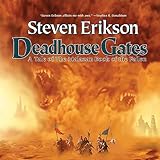
- Audible Audiobook
- Steven Erikson (Author) - Ralph Lister (Narrator)
- English (Publication Language)
- 02/22/2013 (Publication Date) - Brilliance Audio (Publisher)
6. Examine Themes of Sacrifice and Survival: Identify and analyze the pervasive themes of loss, the cost of war, and desperate survival.
- Action: Note specific examples of sacrifice, difficult choices, and acts of resilience.
- What to Look For: The emotional and physical toll on characters, the moral compromises they make, and the ultimate price of their actions.
- Mistake: Focusing solely on action and magic, thereby missing the profound philosophical and humanistic underpinnings of Erikson’s narrative.
7. Connect to the Larger Malazan Saga: Consider how Deadhouse Gates contributes to the overarching mythology of the series.
- Action: Look for foreshadowing and the establishment of new power dynamics or conflicts.
- What to Look For: Seeds of future plotlines, hints about ancient history, and the evolving landscape of the Malazan world.
- Mistake: Reading Deadhouse Gates as an isolated story, rather than understanding its integral role as a building block in a sprawling, interconnected saga.
Deadhouse Gates by Steven Erikson: Common Myths
Myth: Deadhouse Gates can be read as a standalone novel.
- Correction: This is a significant misconception. Deadhouse Gates is the direct sequel to Gardens of the Moon and relies heavily on established characters, plot threads, and world-building from the first book. Attempting to read it without prior knowledge will lead to considerable confusion and a diminished appreciation of the narrative.
Myth: The dual narrative structure inherently makes the book disjointed.
- Correction: While the novel features two distinct storylines, Erikson masterfully connects them thematically. The perceived difficulty often arises from the density of information and the need to track multiple character arcs, rather than a flaw in the narrative structure itself. The payoff for following both threads is a richer, more complex understanding of the novel’s core ideas.
Expert Tips for Navigating Deadhouse Gates
- Tip: Maintain a running glossary and character tracker.
- Actionable Step: As you read, create a simple document or notebook to record new characters, their affiliations, key terms (like Warrens, Ascendants, specific locations), and brief notes on their roles. Refer back to this list frequently.
- Common Mistake to Avoid: Trying to memorize every detail. This approach can lead to frustration. Instead, use your tracker as a reference tool to build understanding incrementally.
- Tip: Understand the “grey morality” of Ascendants and deities.
- Actionable Step: Recognize that the gods and Ascendants in Deadhouse Gates operate on scales and with motivations that are often alien to human comprehension. Their actions are not necessarily aligned with human notions of good or evil.
- Common Mistake to Avoid: Projecting human ethics onto divine entities. Their concerns are often with cosmic balance, power struggles, or ancient pacts, which can have devastating consequences for mortals without any malicious intent on their part.
- Tip: Actively seek thematic parallels between the narrative threads.
- Actionable Step: When transitioning between the Malazan military campaign and the refugee trek, consciously look for recurring themes such as leadership, faith, the burden of command, and the struggle for survival.
- Common Mistake to Avoid: Treating the two primary storylines as entirely separate entities. Their power and resonance come from their thematic interplay and how they reflect different facets of the same core ideas.
Deadhouse Gates by Steven Erikson: A Deeper Look
Steven Erikson’s Deadhouse Gates is not merely a continuation of the Malazan Book of the Fallen series; it is a profound expansion of its thematic and narrative scope. While Gardens of the Moon laid the groundwork with its introduction to the Malazan Empire, its complex magic systems, and its cast of morally ambiguous soldiers, Deadhouse Gates takes this foundation and builds upon it with a dual narrative that explores the devastating human cost of empire and the brutal realities of survival.
The novel is characterized by its intricate plotting and its willingness to present a world where gods and mortals are inextricably, and often tragically, linked. The introduction of the harrowing journey of the Seven Cities refugees provides a stark counterpoint to the more conventional military engagements of the Malazan army. This juxtaposition allows Erikson to delve into themes of faith, fanaticism, and the sheer resilience of the human spirit in the face of unimaginable hardship.
One of the more counter-intuitive aspects of Deadhouse Gates, and indeed the entire Malazan series, is the portrayal of its “heroes.” They are rarely clear-cut figures of virtue. Instead, they are flawed individuals, often soldiers hardened by years of brutal warfare, making difficult decisions with imperfect information. This nuanced approach to characterization is a significant strength, demanding that readers engage critically with motivations and consequences, rather than passively accepting heroic archetypes.
BLOCKQUOTE_0
This sentiment, often echoed in the Malazan narrative, speaks to the overwhelming, seemingly unstoppable nature of the Malazan Empire, but also hints at its inherent instability and the potential for internal decay or external resistance. In Deadhouse Gates, this is explored not just through military might but through the ideological and spiritual struggles faced by both the empire’s soldiers and its subjects.
Quick Comparison
| Feature | Deadhouse Gates (Steven Erikson) | Gardens of the Moon | Other Epic Fantasy Series |
|---|---|---|---|
| Narrative Focus | Dual storylines: Malazan army campaign and refugee exodus. |
Decision Rules
- If reliability is your top priority for Deadhouse Gates by Steven Erikson, choose the option with the strongest long-term track record and support.
- If value matters most, compare total ownership cost instead of headline price alone.
- If your use case is specific, prioritize fit-for-purpose features over generic ‘best overall’ claims.