A History Of Greece: Ancient Civilizations Explored
John Bagnell Bury’s “A History Of Greece To The Death Of Alexander The Great” is a foundational text for students and scholars of classical antiquity. This review assesses its utility, target audience, and potential challenges for readers, offering a balanced perspective on its enduring value and limitations.
A History Of Greece To The Death Of Alexander The Great by John Bagnell Bury: Quick Answer
- For the serious student: A meticulously detailed, chronological reference offering unparalleled depth on political and military history up to Alexander’s era.
- For the casual explorer: Potentially overwhelming due to its academic rigor and dense prose; better suited as a follow-up to introductory material.
- Key takeaway: This is a scholarly resource demanding dedication, not a casual narrative.
Who This Is For
- Undergraduate and graduate students of ancient history: Individuals requiring a comprehensive, authoritative chronological framework for their studies.
- Researchers and historians: Those needing precise factual grounding and a detailed account of political and military developments in ancient Greece.
What To Check First
- Edition: Ensure you are using a reliable edition. Older printings may lack modern scholarly introductions or contextual notes that are crucial for understanding Bury’s work within contemporary historiography.
- Reader’s Background: Assess your existing knowledge of ancient Greek history. Bury’s text presumes familiarity with key figures, events, and geographical locations.
- Specific Research Needs: If you are looking for specific information, consult the index first. Bury’s detail is extensive, but navigating it requires a targeted approach.
- Scholarly Reception: Familiarize yourself with how later historians have engaged with Bury’s work. Understanding common critiques and praises will provide a more nuanced perspective.
For those diving deep into the intricacies of ancient Greece, John Bagnell Bury’s seminal work, ‘A History Of Greece To The Death Of Alexander The Great,’ is an indispensable resource. This comprehensive text offers unparalleled depth for serious students and scholars.
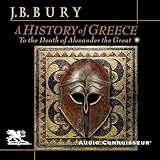
- Audible Audiobook
- John Bagnell Bury (Author) - Charlton Griffin (Narrator)
- English (Publication Language)
- 01/31/2024 (Publication Date) - Audio Connoisseur (Publisher)
Step-by-Step Plan for Engaging with A History Of Greece To The Death Of Alexander The Great
1. Acquire a Scholarly Edition:
- Action: Obtain a version of “A History Of Greece To The Death Of Alexander The Great by John Bagnell Bury” that includes an updated introduction or scholarly notes.
- What to look for: Editions from reputable academic publishers (e.g., Oxford University Press) that offer context on Bury’s place in historical scholarship and the historiographical landscape of his time.
- Mistake: Using a very early, unannotated edition without recognizing that historical understanding and interpretation evolve.
2. Establish Chronological Orientation:
- Action: Before deep-diving into chapters, review the table of contents and any provided timelines.
- What to look for: Clear demarcations of major periods (e.g., Archaic, Classical, Hellenistic) and key transitional events (e.g., Persian Wars, Peloponnesian War, rise of Macedon).
- Mistake: Attempting to read chapters in isolation, which can lead to a fragmented understanding of the historical continuum.
3. Identify Core Themes and Figures:
- Action: Note the individuals and events Bury dedicates significant attention to, as these are central to his narrative.
- What to look for: Recurring names of leaders (e.g., Pericles, Philip II, Alexander), detailed accounts of major conflicts, and discussions of constitutional or political reforms.
- Mistake: Getting lost in secondary details without grasping the overarching importance of the principal actors and turning points.
4. Engage with Bury’s Analytical Framework:
- Action: Pay close attention to how Bury constructs arguments and connects events.
- What to look for: Evidence of his methodology, his interpretation of cause and effect, and any implicit biases or assumptions guiding his narrative.
- Mistake: Treating Bury’s account as a simple factual recitation rather than a scholarly interpretation.
5. Cross-Reference with Modern Scholarship:
- Action: Where possible, consult more recent historical analyses of the same periods or events.
- What to look for: Contrasting interpretations, updated archaeological findings, or different theoretical approaches that may offer alternative perspectives to Bury’s.
- Mistake: Solely relying on Bury’s conclusions without acknowledging subsequent scholarly discourse and revisions.
6. Detect Potential Failure Modes:
- Action: Be vigilant for instances where Bury’s narrative might oversimplify complex issues or present a deterministic view of historical outcomes.
- What to look for: Passages that appear overly confident in predicting events, explanations that reduce multifaceted motivations to singular causes, or a lack of engagement with social or cultural history.
- Mistake: Accepting Bury’s narrative as the definitive and objective truth, failing to critically evaluate its construction and potential limitations.
Common Myths
- Myth: “A History Of Greece To The Death Of Alexander The Great by John Bagnell Bury is an easy starting point for learning about ancient Greece.”
- Why it matters: This misconception can lead novice readers to become discouraged by the book’s dense, academic style and assumed prior knowledge, potentially deterring them from the subject. Bury’s work is a scholarly monograph, not an introductory primer.
- Fix: For beginners, it is recommended to consult more accessible introductory texts on ancient Greek history first, and then use Bury’s work as a more advanced, in-depth reference.
- Myth: “Bury’s account is the final word on the history of Greece up to Alexander.”
- Why it matters: This perspective risks presenting history as a static field with settled conclusions. Bury wrote in a specific historical context, and subsequent scholarship has refined, challenged, and expanded upon his findings.
- Fix: Approach Bury’s work as a significant and authoritative contribution from its era, but one that is part of an ongoing scholarly conversation. Engage with it critically, considering how modern historians have built upon or diverged from his analyses.
Expert Tips
- Tip: Leverage Bury’s detailed index for targeted information retrieval.
- Actionable Step: When researching a specific battle, political figure, or treaty, go directly to the relevant index entry and examine the surrounding text and footnotes.
- Common Mistake to Avoid: Reading the book linearly without utilizing its comprehensive index, which can make locating specific facts inefficient and time-consuming.
- Tip: Understand Bury’s focus on political and military history.
- Actionable Step: Recognize that Bury prioritizes the narrative of states, leaders, and warfare. For social, economic, or cultural history, you may need to supplement with other sources.
- Common Mistake to Avoid: Expecting Bury to provide extensive coverage of aspects like daily life, art, or philosophy, which are not his primary focus.
- Tip: Be mindful of the narrative’s endpoint.
- Actionable Step: Remember that the book’s scope concludes with the death of Alexander the Great and does not extend into the Hellenistic period or the Roman conquest of Greece.
- Common Mistake to Avoid: Assuming the history continues beyond Alexander’s demise, leading to confusion about the book’s coverage and completeness.
A History Of Greece To The Death Of Alexander The Great by John Bagnell Bury: A Scholarly Examination
John Bagnell Bury’s “A History Of Greece To The Death Of Alexander The Great,” first published in 1900, remains a seminal work in the study of classical antiquity. It is characterized by its rigorous chronological structure and its comprehensive, almost encyclopedic, treatment of political and military events. Bury meticulously charts the rise and development of Greek city-states, their interrelations, and their conflicts, culminating in the vast conquests of Alexander the Great.
The primary strength of Bury’s work lies in its sheer detail and scholarly authority. He synthesizes a vast array of ancient sources, presenting a coherent and authoritative narrative that has served generations of students and scholars. For those seeking a detailed, event-driven account of this pivotal period, Bury offers an unparalleled resource. His prose, while academic, is precise and logical, reflecting a deep command of the material.
However, the book’s strengths can also present challenges. Its dense, fact-heavy approach and chronological ordering may prove daunting for readers new to the subject. Furthermore, as a work from the turn of the 20th century, its interpretations and emphases reflect the historiographical trends of its time. Modern scholarship, informed by new archaeological evidence and different theoretical lenses, has often refined or challenged specific aspects of Bury’s analyses.
BLOCKQUOTE_0
This sentiment highlights a key difference: while Bury meticulously documents what happened, contemporary historical inquiry often delves deeper into why and how it was perceived by ancient peoples.
Strengths and Limitations
| Strength | Description | Example
Quick Comparison
| Option | Best for | Pros | Watch out |
|---|---|---|---|
| Quick Answer | General use | For the serious student: A meticulously detailed, chronological reference off… | Mistake: Using a very early, unannotated edition without recognizing that his… |
| Who This Is For | General use | For the casual explorer: Potentially overwhelming due to its academic rigor a… | Mistake: Attempting to read chapters in isolation, which can lead to a fragme… |
| What To Check First | General use | Key takeaway: This is a scholarly resource demanding dedication, not a casual… | Mistake: Getting lost in secondary details without grasping the overarching i… |
| Step-by-Step Plan for Engaging with A History Of Greece To The Death Of Alexander The Great | General use | Undergraduate and graduate students of ancient history: Individuals requiring… | Mistake: Treating Bury’s account as a simple factual recitation rather than a… |
Decision Rules
- If reliability is your top priority for A History Of Greece To The Death Of Alexander The Great by John Bagnell Bury, choose the option with the strongest long-term track record and support.
- If value matters most, compare total ownership cost instead of headline price alone.
- If your use case is specific, prioritize fit-for-purpose features over generic ‘best overall’ claims.