Wilson Rawls’ Where The Red Fern Grows Analyzed
Where the Red Fern Grows by Wilson Rawls: Quick Answer
- Core Appeal: A poignant, often heartbreaking narrative of a boy’s deep bond with his coonhounds in the Ozark Mountains, exploring themes of loyalty, loss, and perseverance.
- Literary Merit: While emotionally resonant, its straightforward prose and somewhat idealized portrayal of rural life may not appeal to readers seeking complex modernist structures or challenging philosophical inquiries.
- Recommendation: Highly recommended for readers who appreciate classic coming-of-age stories with strong emotional cores and a focus on the human-animal connection.
Who This Is For
- Readers seeking a classic, emotionally engaging American novel that explores themes of nature, loyalty, and loss.
- Individuals interested in stories that depict the challenges and rewards of rural life and the profound relationships between humans and animals.
For those seeking a classic coming-of-age story with a powerful emotional core and a deep exploration of the human-animal connection, Wilson Rawls’s ‘Where the Red Fern Grows’ is an excellent choice.
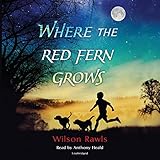
- Audible Audiobook
- Wilson Rawls (Author) - Anthony Heald (Narrator)
- English (Publication Language)
- 10/24/2003 (Publication Date) - Listening Library (Publisher)
What to Check First
- Emotional Resilience: The novel contains significant instances of loss and hardship. Readers sensitive to animal suffering or the death of beloved characters should be aware.
- Pacing and Style: The narrative follows a traditional, linear structure with descriptive prose. Those preferring experimental or fast-paced thrillers may find it slow.
- Thematic Depth: While rich in sentiment, the novel’s primary themes are relatively straightforward: loyalty, determination, and the bond with nature. Readers seeking intricate political or psychological subplots might look elsewhere.
- Historical Context: The story is set in Depression-era Ozarks. Understanding this backdrop enhances appreciation for the characters’ struggles and resourcefulness.
Step-by-Step Plan: Analyzing “Where the Red Fern Grows”
1. Identify the Central Conflict: Action: Examine Billy Colman’s driving desire for hunting dogs. Look for: Billy’s persistent saving of money, his internal monologues about his dream, and the initial resistance from his parents. Mistake: Overlooking the depth of Billy’s yearning as mere childhood fancy rather than a core motivation shaping the narrative.
2. Assess the Human-Animal Bond: Action: Analyze the relationship between Billy and his dogs, Old Dan and Little Ann. Look for: Instances of non-verbal communication, Billy’s deep empathy for their well-being, and their mutual reliance during hunts. Mistake: Viewing the dogs as mere tools for hunting rather than integral characters with their own personalities and emotional significance.
3. Evaluate the Narrative Arc of Loss: Action: Trace the progression of tragic events, particularly the fate of the dogs. Look for: The escalating dangers of hunts, the specific circumstances leading to injuries and death, and Billy’s profound grief. Mistake: Underestimating the narrative’s commitment to depicting genuine loss and its impact on the protagonist.
4. Examine the Thematic Resonance: Action: Identify recurring themes such as perseverance, loyalty, and the wildness of nature. Look for: Billy’s unwavering determination despite setbacks, the dogs’ fierce loyalty, and the portrayal of the Ozark wilderness as both beautiful and dangerous. Mistake: Dismissing the themes as simplistic or overly sentimental without acknowledging their universal appeal and effective execution.
5. Consider the Author’s Style: Action: Analyze Wilson Rawls’s prose and narrative voice. Look for: The use of descriptive language, the pacing of the story, and the overall tone. Mistake: Judging the accessible, earnest style as unsophisticated rather than recognizing its effectiveness in conveying the story’s emotional weight and setting.
6. Determine the Impact of Setting: Action: Analyze the role of the Ozark Mountains in the story. Look for: Descriptions of the landscape, the challenges it presents, and how it shapes the characters’ lives and the dogs’ hunting abilities. Mistake: Treating the setting as a mere backdrop rather than an active force influencing the plot and character development.
7. Acknowledge the Novel’s Legacy: Action: Reflect on the book’s enduring popularity and its place in American literature. Look for: Evidence of its widespread readership, its inclusion in school curricula, and its continued emotional impact on readers. Mistake: Failing to recognize the book’s cultural significance and the reasons behind its sustained appeal across generations.
Understanding Where the Red Fern Grows by Wilson Rawls
Wilson Rawls’s Where the Red Fern Grows is a seminal work in American children’s and young adult literature, celebrated for its emotional depth and vivid portrayal of rural life. Set in the rugged Ozark Mountains of Oklahoma during the Great Depression, the novel chronicles the life of young Billy Colman and his unwavering dream of owning two Redbone Coonhounds. His relentless saving of every penny earned from odd jobs, facing parental skepticism, ultimately leads to the acquisition of his beloved dogs, Old Dan and Little Ann. The narrative then follows their adventures as Billy trains them for coon hunting, a sport that forms the backbone of their community’s social life and Billy’s personal identity.
The strength of Where the Red Fern Grows by Wilson Rawls lies in its powerful depiction of the profound bond between Billy and his hounds. Rawls masterfully illustrates their shared experiences, the unspoken communication, and the absolute loyalty that develops between them. The hunts are depicted with a thrilling intensity, showcasing not only the dogs’ skill and Billy’s tracking prowess but also the inherent dangers of the wilderness. This bond is tested severely through a series of escalating trials, culminating in a brutal encounter that leads to immense loss for Billy. The novel doesn’t shy away from the harsh realities of life and death, making the eventual tragedies all the more impactful.
Literary Strengths and Limitations
The novel’s primary strength is its potent emotional resonance. Rawls taps into universal themes of love, loyalty, determination, and grief, creating a story that lingers long after the final page. The vivid descriptions of the Ozark landscape and the authentic portrayal of rural traditions offer a rich, immersive reading experience. The straightforward, earnest prose makes the narrative accessible to a wide range of readers, particularly younger audiences.
However, the novel’s limitations stem from its very accessibility. The character development, while effective in eliciting sympathy, can be somewhat archetypal. Billy is the earnest, determined protagonist, and the dogs embody unwavering loyalty. The narrative’s linear structure and lack of complex subplots, while contributing to its clarity, may leave readers accustomed to more intricate literary constructions wanting. Furthermore, the idealized portrayal of rural life, while nostalgic, can sometimes gloss over the more systemic hardships of the era.
| Aspect | Strength | Limitation | Impact on Reader Experience |
|---|---|---|---|
| Emotional Core | Deeply moving depiction of human-animal bond. | Can be overly sentimental for some readers. | Evokes strong empathy and connection to characters. |
| Prose Style | Clear, descriptive, and accessible. | Lacks stylistic complexity or experimentation. | Easy to read, but may not engage literary scholars. |
| Thematic Focus | Universal themes of loyalty and perseverance. | Themes are presented directly, not subtly. | Provides clear moral lessons and relatable struggles. |
| Characterization | Relatable protagonist and loyal animal companions. | Characters can be somewhat predictable. | Fosters strong reader identification with Billy and his dogs. |
| Setting | Vivid and immersive portrayal of Ozarks. | Idealized depiction of rural life. | Creates a strong sense of place and historical atmosphere. |
Common Myths About “Where the Red Fern Grows”
- Myth: The novel is solely a story about hunting.
- Correction: While hunting is a central activity, the novel’s core is the profound emotional bond between a boy and his dogs, exploring themes of love, loyalty, loss, and perseverance. The hunts serve as a vehicle for developing these relationships and testing the characters.
- Myth: The story is entirely fictional and fabricated by Wilson Rawls.
- Correction: While specific events are fictionalized, Rawls drew heavily on his own childhood experiences and observations of life in the Ozarks. He often stated that the story was inspired by his youth and the dogs he knew, giving it a strong autobiographical flavor.
Expert Tips for Reading “Where the Red Fern Grows”
- Tip: Engage with the historical and geographical context.
- Action: Before or during reading, research the Great Depression era in the Ozarks and the general lifestyle of people living in that region during the early 20th century.
- Common Mistake: Reading the novel without appreciating the socio-economic realities that shaped the characters’ lives, which can lead to underestimating their struggles and resourcefulness.
- Tip: Focus on the subtext of the human-animal relationship.
- Action: Pay close attention to Rawls’s descriptions of Billy’s interactions with Old Dan and Little Ann, noting how their actions and Billy’s interpretations reveal deep emotional understanding and loyalty beyond simple obedience.
- Common Mistake: Viewing the dogs merely as hunting tools, thereby missing the novel’s central exploration of unconditional love and the profound impact of animal companionship on human development.
- Tip: Prepare for the emotional arc.
- Action: Understand that the narrative is designed to build significant emotional investment in the characters and their relationships, leading to a powerful, albeit potentially sorrowful, climax.
- Common Mistake: Approaching the novel with an expectation of a consistently uplifting or lighthearted tone, leading to being blindsided by the intensity of the tragic elements.
BLOCKQUOTE_0
Decision Rules
- If reliability is your top priority for Where the Red Fern Grows by Wilson Rawls, choose the option with the strongest long-term track record and support.
- If value matters most, compare total ownership cost instead of headline price alone.
- If your use case is specific, prioritize fit-for-purpose features over generic ‘best overall’ claims.
FAQ
- Q: Is “Where the Red Fern Grows” appropriate for young children?
- A: The novel deals with mature themes of loss and death, particularly concerning animals. While many children enjoy it, parental guidance is recommended to discuss these sensitive elements.
- Q: What makes the bond between Billy and his dogs so special?
- A: