Alasdair Gray’s Lanark: A Postmodern Masterpiece
Lanark by Alasdair Gray: Quick Answer
- Lanark by Alasdair Gray is a complex, multi-layered novel that defies easy categorization, blending autobiography, fantasy, and social commentary.
- Readers seeking a straightforward narrative or conventional plot progression may find it challenging.
- Its strengths lie in its ambitious scope, unique voice, and profound exploration of identity and the human behavior.
Who This Is For
- Readers who appreciate experimental fiction and are willing to engage with challenging literary structures.
- Those interested in post-war Scottish literature and critiques of societal systems.
What to Check First
- Narrative Structure: Be aware that the novel is not linear. It presents two intertwined narratives that shift between different timelines and realities.
- Authorial Intent: Gray famously stated the book was written to be “read at a sitting,” a comment that can be interpreted in multiple ways, hinting at its density and interconnectedness.
- Thematic Depth: The novel tackles weighty themes such as art, politics, identity, illness, and the nature of reality.
- Unconventional Presentation: Expect unusual typography, illustrations, and a metafictional approach that breaks the fourth wall.
Step-by-Step Plan for Engaging with Lanark
1. Understand the Dual Narrative: Begin by recognizing the two main storylines: the contemporary (for the time of writing) story of Duncan Thaw, an artist struggling with illness and artistic integrity, and the allegorical tale of the city of Unthank and its inhabitants, particularly the character Lanark.
- Action: Read the first section focusing on Thaw’s experiences and the later sections detailing Lanark’s journey.
- What to Look For: The parallels and divergences between Thaw’s internal struggles and Lanark’s external (and internal) battles.
- Mistake: Assuming the two narratives are entirely separate or that one is a simple allegory for the other.
2. Embrace the Unconventional Structure: Do not expect a traditional chronological or cause-and-effect plot. The novel intentionally disrupts conventional storytelling.
- Action: Allow the narrative to unfold without forcing a linear interpretation.
- What to Look For: The thematic resonances and recurring motifs that connect disparate sections.
- Mistake: Becoming frustrated by the lack of clear progression and abandoning the book prematurely.
3. Analyze the Use of Language and Typography: Gray’s use of language is precise and often stark, while his typographical experiments are integral to the meaning.
- Action: Pay attention to the font choices, layout, and the specific wording Gray employs.
- What to Look For: How the visual elements and language contribute to the atmosphere and thematic concerns.
- Mistake: Overlooking the visual aspects of the book as mere stylistic flourishes rather than crucial components of the narrative.
4. Consider the Autobiographical Elements: While fictional, Lanark draws heavily on Gray’s own life experiences, particularly his time as an artist and his struggles with illness.
- Action: Research Gray’s biography to understand the personal context informing the novel.
- What to Look For: The ways in which Thaw’s experiences mirror Gray’s own artistic and personal journey.
- Mistake: Dismissing the autobiographical undertones as irrelevant to the broader allegorical and social critiques.
5. Engage with the Social and Political Commentary: Lanark is a powerful critique of various societal systems, including bureaucracy, capitalism, and the art establishment.
- Action: Identify specific instances of critique within the narrative, particularly concerning the governance of Unthank and the treatment of its citizens.
- What to Look For: The ways in which the fictional world reflects real-world societal failings.
- Mistake: Reading the novel solely as a personal or fantastical journey, ignoring its potent social commentary.
6. Look for the Philosophical Underpinnings: The novel delves into existential questions about identity, reality, and the search for meaning.
- Action: Reflect on the characters’ quests for self-understanding and their confrontations with existential dilemmas.
- What to Look For: The recurring philosophical questions and attempts at resolution within the text.
- Mistake: Failing to recognize the deeper philosophical inquiries beneath the surface narrative.
If you’re looking to dive into this seminal work, you can find Lanark by Alasdair Gray readily available. It’s a challenging but incredibly rewarding read for those who appreciate experimental fiction.
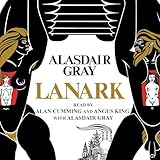
- Audible Audiobook
- Alasdair Gray (Author) - Alan Cumming, Angus King, Alasdair Gray (Narrators)
- English (Publication Language)
- 02/25/2026 (Publication Date) - Canongate Books (Publisher)
Lanark by Alasdair Gray: Navigating Its Complexity
Understanding the Failure Mode: Narrative Disorientation
A common failure mode for readers encountering Lanark by Alasdair Gray is narrative disorientation, leading to a feeling of being lost rather than engaged. This arises from the novel’s deliberate subversion of linear chronology and its interweaving of disparate narrative strands and realities. Readers accustomed to a clear, forward-moving plot may struggle to orient themselves within the book’s fractured structure.
Detection: This failure mode can be detected early on if a reader consistently feels confused about “when” or “where” they are in the story, or if they find themselves rereading passages repeatedly without gaining a clearer sense of narrative progression. A persistent feeling of being adrift, rather than intrigued by the mystery, is a key indicator.
Correction: To mitigate this, readers should adopt a more fluid approach, focusing on thematic connections and character arcs rather than strict chronological order. The novel is designed to be pieced together, much like a mosaic, rather than consumed as a straightforward chronicle. Embracing the ambiguity and the author’s metafictional play is crucial.
Common Myths
- Myth: Lanark is an impenetrable, purely academic novel.
- Correction: While challenging, Lanark is deeply human and emotionally resonant. Gray imbues his characters, even in allegorical settings, with palpable struggles and desires. The novel’s artistic ambition is matched by its raw portrayal of suffering and the search for meaning.
- Myth: The novel’s unconventional structure is merely a gimmick.
- Correction: The fractured narrative, unusual typography, and metafictional elements are integral to Lanark‘s themes. They directly serve to explore the fragmented nature of identity, the unreliability of perception, and the breakdown of societal structures. The form is inseparable from the content.
- Myth: The book is solely about Glaswegian life and its problems.
- Correction: While set in and critically examining Glasgow, Lanark transcends its specific setting. Its allegorical elements and explorations of universal themes like art, life, death, and the human behavior give it a broader, international relevance.
Expert Tips
- Tip: Approach the novel as a puzzle to be solved, not a story to be passively consumed.
- Actionable Step: Keep a notebook to jot down recurring symbols, character names, and thematic connections as you read. This active engagement will help you build your own framework for understanding.
- Common Mistake to Avoid: Trying to force a single, definitive interpretation of every element too early; instead, allow interpretations to evolve.
- Tip: Understand that the “real” and the “fantastical” are blurred intentionally.
- Actionable Step: Treat the allegorical sections of Unthank with the same narrative weight as the more realistic sections involving Duncan Thaw; look for the thematic bridges between them.
- Common Mistake to Avoid: Dismissing the fantastical elements of Unthank as mere metaphor, thereby missing how they inform and reflect the “real” world Gray depicts.
- Tip: Recognize the metafictional layers that question the nature of storytelling itself.
- Actionable Step: Pay attention to passages where the narrator or characters seem aware of being in a book, or where Gray directly addresses the reader.
- Common Mistake to Avoid: Reading the metafictional elements as intrusive authorial asides rather than as integral parts of the novel’s exploration of art and reality.
BLOCKQUOTE_0
Decision Rules
- If reliability is your top priority for Lanark by Alasdair Gray, choose the option with the strongest long-term track record and support.
- If value matters most, compare total ownership cost instead of headline price alone.
- If your use case is specific, prioritize fit-for-purpose features over generic ‘best overall’ claims.
FAQ
- Q: Is Lanark a difficult book to read?
- A: Yes, Lanark is considered a challenging read due to its experimental structure, complex themes, and unconventional narrative. However, for those willing to engage with its complexities, it offers significant rewards.
- Q: What is the significance of the city of Unthank?
- A: Unthank serves as an allegorical representation of a decaying, bureaucratic city, reflecting social and political ills. It is a landscape of the mind as much as a physical place, embodying themes of neglect, alienation, and the loss of identity.
- Q: How does Lanark relate to Alasdair Gray’s other works?
- A: Lanark is widely considered Gray’s magnum opus and encapsulates many of his recurring concerns: the nature of Scottish identity, the role of the artist, the critique of power structures, and the interplay between personal experience and societal forces. It sets a benchmark for his unique literary style.
- Q: Should I read Lanark before or after reading other books by Alasdair Gray?
- A: While Lanark can be read independently, reading it first provides a strong foundation for understanding Gray’s thematic preoccupations and stylistic innovations. His later works often engage with ideas first explored in Lanark.
| Aspect of Reading | Difficulty Level | Recommended Approach |
|---|---|---|
| Narrative Flow | High | Focus on thematic connections over strict chronology. |
| Language | Medium-High | Pay attention to Gray’s precise word choices and tone. |
| Thematic Depth | High | Engage with the philosophical and social critiques. |
| Experimental Form | High | Embrace the unconventional structure and typography. |