Sheila Heti’s How Should A Person Be?: A Philosophical Novel
This novel presents a meta-fictional exploration of identity, art, and friendship, framed as a dialogue between author Sheila Heti and her characters. It challenges conventional narrative structures and philosophical inquiry through its unique, autobiographical-yet-fictional approach. Readers interested in experimental literature and explorations of self-creation will find it compelling, while those preferring linear plots may find it disorienting.
How Should a Person Be? by Sheila Heti: Who This Is For
- Readers interested in philosophical novels that blur the lines between fiction and reality.
- Those who appreciate experimental literary styles and meta-narrative techniques.
What to Check First
- Narrative Structure: The book is not a traditional story with a clear beginning, middle, and end. Its structure is fluid and conversational, resembling transcribed thought processes or dialogues.
- Philosophical Underpinnings: The novel grapples with existential questions about authenticity, artistic integrity, and the nature of being. Expect abstract concepts to be central.
- Authorial Presence: Sheila Heti, the author, is a character within the novel, directly engaging with other characters and her own creative process.
- Genre Blending: It combines elements of fiction, autobiography, philosophy, and essay.
Step-by-Step Plan: Engaging with How Should A Person Be?
1. Acknowledge the Meta-Fictional Framework:
- Action: Understand that the author, Sheila Heti, is a character in the novel, actively participating in its creation and questioning its form.
- What to Look For: Observe Heti’s direct address to the reader, her internal monologues, and her interactions with her fictionalized friends.
- Mistake: Expecting a detached authorial voice or a purely objective narrative.
2. Engage with the Conversational Style:
- Action: Embrace the dialogue-driven format, recognizing that much of the “plot” unfolds through conversations and reflections.
- What to Look For: Pay attention to the nuances of the characters’ exchanges, their philosophical debates, and their personal revelations.
- Mistake: Becoming impatient with the lack of rapid plot progression; the pacing is deliberate and reflective.
3. Identify the Core Philosophical Questions:
- Action: Tune into the central inquiries about identity, art, and how to live authentically.
- What to Look For: Note recurring themes such as the pressure to create meaningful art, the search for genuine selfhood, and the complexities of friendship.
- Mistake: Underestimating the depth of the philosophical discussions, viewing them as mere exposition.
4. Analyze Character Authenticity:
- Action: Consider the presented characters (Sheila, Margie, and others) as constructs and explorations of different facets of self.
- What to Look For: Observe how the characters question their own actions, motivations, and the roles they play in their lives and in the narrative.
- Mistake: Treating the characters as purely fictional beings without recognizing their connection to real-life experiences and philosophical concepts.
5. Appreciate the Unconventional Structure:
- Action: Accept that the novel may not follow traditional narrative arcs or resolutions.
- What to Look For: Notice how the book circles back on itself, revisits ideas, and builds understanding through cumulative reflection rather than linear progression.
- Mistake: Searching for a definitive plot climax or a neat conclusion; the novel’s strength lies in its ongoing inquiry.
6. Consider the “Self-Help” Aspect:
- Action: Recognize that the title itself poses a question that the novel attempts to explore through its characters’ lives and dialogues.
- What to Look For: Examine how the characters’ struggles and insights offer potential, albeit unconventional, answers to the titular question.
- Mistake: Dismissing the title as purely rhetorical; it is the driving force behind the narrative exploration.
How Should A Person Be? by Sheila Heti: A Contrarian Perspective
Many reviews of Sheila Heti’s How Should A Person Be? highlight its innovative approach to fiction and its philosophical depth. However, a contrarian perspective suggests that the novel’s greatest strength—its radical self-reflexivity—is also its most significant barrier to entry and a potential source of reader frustration. The book is less a novel in the traditional sense and more a documented experiment in self-inquiry, where the author, as a character, meticulously dissects her own creative process and existential anxieties.
The danger here is not a lack of intellectual rigor, but an over-reliance on the author’s internal world to the exclusion of more universally accessible narrative propulsion. While the meta-fictional conceit is intellectually stimulating, it can also create a sense of detachment. The reader is constantly reminded that they are observing an author constructing a narrative about how to be, rather than experiencing a story that shows how a person might be. This can lead to a feeling of intellectual spectatorship rather than empathetic immersion. The book demands a reader willing to actively participate in the philosophical excavation, rather than passively receive a story. For those who expect plot, character development in a conventional sense, or even a clear emotional arc, How Should A Person Be? might feel more like an extended philosophical exercise than a novel.
Dive into Sheila Heti’s unique exploration of identity and art with ‘How Should A Person Be?’. This philosophical novel is a compelling read for those interested in experimental literature.
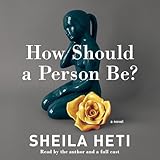
- Audible Audiobook
- Sheila Heti (Author) - Adam Hammond, Alison Deon, Amanda Nkeremihigo (Narrators)
- English (Publication Language)
- 07/15/2025 (Publication Date) - Macmillan Audio (Publisher)
Common Myths
- Myth: The book is a straightforward autobiography.
- Why it matters: Misinterpreting it as pure autobiography can lead to judgment of the author’s personal life rather than an appreciation of her literary experiment.
- Fix: Understand that while drawing from Heti’s life, the characters and events are mediated through fiction and philosophical inquiry, making it a “philosophical novel” rather than a memoir.
- Myth: The novel offers definitive answers to life’s big questions.
- Why it matters: This expectation can lead to disappointment if the reader seeks concrete solutions. The book is more about the process of questioning.
- Fix: Approach the novel as an exploration of questions, not a delivery system for answers. The value lies in the contemplation and the dialogue it sparks.
Expert Tips
- Tip: Embrace the ambiguity of the author-character.
- Action: Read Sheila Heti the character as a distinct entity from Sheila Heti the author, even though they are intertwined. Observe her anxieties and decisions as part of the novel’s thematic exploration.
- Mistake to Avoid: Judging the author based on the character’s perceived flaws or indecisions.
- Tip: Focus on the philosophical dialogues as the primary narrative engine.
- Action: Pay close attention to the conversations between Sheila, Margie, and others. These exchanges are where the novel’s “action” and thematic development occur.
- Mistake to Avoid: Skimming over the philosophical discussions, waiting for external events to drive the story.
- Tip: Reframe your expectations of plot and resolution.
- Action: Understand that the novel’s resolution is not a neat tying up of loose ends, but rather a continuation of the inquiry. The book’s conclusion is an invitation to further thought.
- Mistake to Avoid: Seeking a traditional narrative arc with a clear climax and denouement.
Quick Comparison
| Feature | Description | Strengths | Limitations |
|---|---|---|---|
| Narrative Style | Meta-fictional, conversational, philosophical dialogue | Unique, thought-provoking, encourages active reader participation | Can be disorienting, lacks traditional plot momentum |
| Authorial Voice | Author as a character, self-reflexive | Intimate, authentic exploration of creative process | May alienate readers seeking external perspectives |
| Thematic Depth | Identity, art, authenticity, friendship | Rich philosophical inquiry | Requires reader engagement with abstract concepts |
Decision Rules
- If intellectual exploration and experimental form are your primary criteria for How Should A Person Be? by Sheila Heti, this novel is a strong contender.
- If you prioritize traditional narrative arcs and character-driven plots, this book may not align with your preferences.
- If you are interested in autofiction and the examination of the self in art, consider this novel as a significant example.
FAQ
Q: Is this book difficult to read?
A: How Should A Person Be? requires active engagement due to its experimental structure and philosophical content. It is not a passive reading experience, but its prose is generally accessible.
Q: What is the main theme of the novel?
A: The central theme revolves around the question of how to live authentically and create meaningful art and relationships in a world that often pressures individuals towards conformity or superficiality.
Q: Who are the main characters?
A: The primary characters are Sheila Heti (who is also the author and a character within the novel), her friend Margie, and a male artist character named Mark. The book also features discussions about other figures and concepts.
Q: How does this book compare to other experimental novels?
A: It shares similarities with autofiction and philosophical novels that question narrative conventions, such as works by Karl Ove Knausgård or Jenny Offill, but Heti’s approach is distinct in its direct interrogation of the creative process itself.
Q: Should I read this book if I prefer linear stories?
A: If you strongly prefer linear narratives with clear plot progression, this book may be challenging. However, if you are curious about experimental forms and philosophical inquiry, it could be a rewarding, albeit different, experience.
Q: What is the significance of the title?
A: The title is a direct philosophical question that the novel attempts to explore through its characters’ lives, dialogues, and Heti’s own self-examination. It frames the entire narrative as an ongoing investigation into the nature of personhood and existence.